
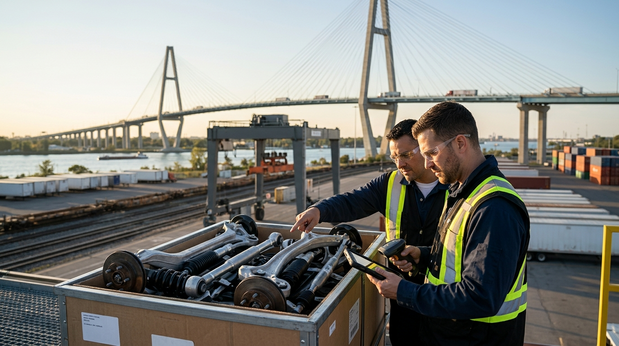
A recent panel discussion among North American auto industry experts has highlighted the potential implications of Chinese parts on the ongoing renegotiation of the United States-Mexico-Canada Agreement (USMCA). This dialogue is particularly significant as it addresses how the inclusion of Chinese components could affect the automotive supply chain and tariff structures, which are critical for manufacturers and workers across the region.
The panel focused on the strategic role of infrastructure, particularly the Gordie Howe Bridge, which connects Detroit, Michigan, to Windsor, Ontario. This bridge is expected to facilitate smoother trade flows between the U.S. and Canada, especially for automotive parts. As the U.S. grapples with its reliance on foreign components, the discussions surrounding the bridge underscore its importance in bolstering regional supply chains and enhancing the competitiveness of North American manufacturers.
Chinese parts have become a focal point in the USMCA discussions due to concerns over supply chain vulnerabilities. Many automotive manufacturers rely on components sourced from China, raising questions about the long-term sustainability of these practices. The panelists noted that a careful examination of these dependencies is necessary to avoid disruptions that could impact production timelines and costs, ultimately affecting American workers.
Tariffs also remain a key topic in the renegotiation process. As the U.S. seeks to balance its trade relationships with Canada and Mexico, the potential imposition of tariffs on Chinese parts could reshape the automotive landscape. Experts suggest that adjusting tariffs strategically could encourage manufacturers to source more components locally, which may support domestic jobs and strengthen the supply chain.
The discussions reflect a broader trend within the automotive industry to reassess supply chain strategies, particularly in light of recent global disruptions. Industry leaders are increasingly aware of the risks associated with over-reliance on single-source suppliers, especially those located overseas. By diversifying their supply chains and potentially increasing domestic production, companies might better position themselves against future shocks.
Furthermore, the implications of these discussions extend beyond tariffs and supply chains. They also touch upon the importance of fostering collaboration among North American countries to enhance shared economic interests. Strengthening ties between the U.S., Canada, and Mexico could lead to more robust industry standards and practices, benefiting workers and communities involved in manufacturing.
As the renegotiation of the USMCA progresses, the outcomes will likely have lasting effects on the automotive sector and its workforce. By addressing the influence of Chinese parts and considering the strategic role of infrastructure, stakeholders are taking steps that could enhance the resilience of the North American automotive industry. Ultimately, these discussions may pave the way for a more sustainable and competitive future, benefiting not only manufacturers but also the workers who rely on a stable and thriving automotive sector.
The ongoing dialogue among industry experts underscores the critical nature of these negotiations. As the automotive landscape continues to evolve, the decisions made today could shape the future of American manufacturing and its workforce for years to come.