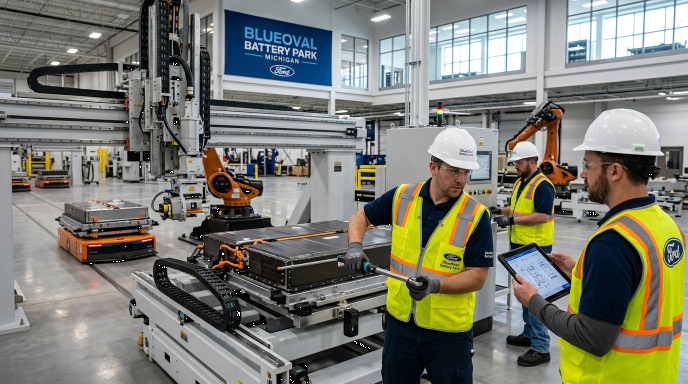
Ford Motor Company is set to hire 800 workers at its new BlueOval Battery Park in Marshall, Michigan, with plans for these employees to be onboard by the end of the year. This hiring initiative comes as part of Ford’s broader strategy to expand its operations in the electric vehicle (EV) sector, which is increasingly vital for the future of the automotive industry. The new workforce will support the production of battery cells, a key component in the transition to electric vehicles.
The BlueOval Battery Park represents a significant investment in American manufacturing, as it underscores Ford’s commitment to domestic production capabilities. The plant is expected to eventually employ a total of 1,700 workers, contributing to the local economy and providing skilled job opportunities in a region that has deep roots in the automotive sector. This hiring move is indicative of a growing trend among automakers to secure local talent as they pivot towards electric vehicle production.
As the demand for electric vehicles continues to rise, the establishment of battery manufacturing facilities like the BlueOval Battery Park could help stabilize supply chains that have been disrupted in recent years. By producing batteries closer to assembly plants, Ford aims to reduce its reliance on overseas suppliers, which can be vulnerable to geopolitical tensions and logistical challenges.
The expansion of the workforce at the Marshall plant is part of a larger effort by Ford to enhance its competitiveness in the electric vehicle market. The company has been investing heavily in new technologies and production methods to meet the evolving demands of consumers and regulatory bodies focused on sustainability. This move aligns with the industry’s shift towards greener technologies and reflects a broader commitment to reducing carbon emissions.
In addition to the direct impact on employment, the hiring of 800 new workers may also have ripple effects on local businesses and services. Increased employment can lead to higher demand for housing, retail, and other community services, potentially benefiting the surrounding area. As these new jobs are filled, local economies may see a boost, contributing to a more robust economic landscape.
Ford’s plans for the BlueOval Battery Park come at a time when the automotive industry is undergoing significant transformation. Automakers are not only competing on vehicle performance and design but also on their sustainability practices. The ability to produce batteries locally is likely to be a critical factor in maintaining a competitive edge in this rapidly changing market.
As Ford moves forward with its hiring plans, the focus will be on attracting skilled workers who can contribute to the innovative processes at the battery plant. This initiative reflects a growing recognition of the importance of skilled labor in manufacturing, particularly in high-tech sectors like electric vehicle production. The emphasis on local hiring could also foster a stronger connection between the company and the community, reinforcing Ford’s role as a key player in the region’s economic development.
In conclusion, Ford’s decision to hire 800 workers at the BlueOval Battery Park highlights a significant step towards strengthening domestic battery production capabilities. As the automotive industry continues to evolve, such initiatives may play a crucial role in ensuring that American manufacturing remains competitive on the global stage. The positive implications for local economies and skilled labor markets are clear, marking another important development in the shift towards sustainable transportation solutions.