
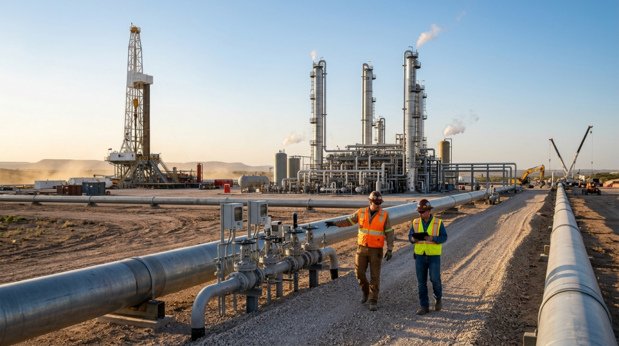
U.S. natural gas production is projected to reach a record high of 122.5 billion cubic feet per day (Bcf/d) in 2026, according to the Energy Information Administration (EIA). This increase is primarily driven by intensified drilling activities in the Permian Basin and growth in the Haynesville region. The anticipated rise in output underscores the ongoing strength and resilience of the American oil and gas industry, which plays a crucial role in the nation’s energy landscape.
The Permian Basin, located in West Texas and southeastern New Mexico, continues to be a significant contributor to the surge in natural gas production. Advances in drilling technology and extraction methods have allowed for more efficient recovery of resources in this region. Similarly, the Haynesville Shale, known for its rich natural gas reserves, is also seeing a notable uptick in production, reflecting a robust demand for domestic energy supplies.
This projected growth in natural gas output is significant for several reasons. First, it could help stabilize energy prices by increasing supply in a market that has seen fluctuations in recent years. A reliable supply of natural gas is essential for various sectors, including electricity generation, manufacturing, and heating, thereby supporting broader economic stability and growth.
Moreover, the rise in production capacity demonstrates the effectiveness of recent investments in infrastructure and technology within the energy sector. Enhanced drilling techniques and improved pipeline networks not only facilitate higher output but also contribute to the overall efficiency of the supply chain. These developments are likely to have positive ripple effects throughout local communities, potentially creating jobs and supporting local economies that depend on the energy sector.
While challenges remain, such as regulatory hurdles and environmental concerns, the projected increase in natural gas production reflects a commitment to modernizing the energy infrastructure in the United States. This modernization is necessary to meet both current and future energy demands, especially as the country continues to transition towards cleaner energy sources while maintaining a diverse energy portfolio.
The anticipated record levels of natural gas production also highlight the United States’ position as a key player in the global energy market. As domestic production increases, it could enhance the country’s ability to export liquefied natural gas (LNG), further solidifying its role as an energy supplier on the world stage. This could lead to stronger trade relationships and increased economic activity.
In summary, the forecast for U.S. natural gas production to reach new heights in 2026 is indicative of a thriving energy sector that is adapting to meet evolving demands. The growth in the Permian and Haynesville regions not only showcases the potential for increased energy independence but also reflects a broader trend of investment and modernization that could benefit American industry and local communities alike. As the industry continues to evolve, the focus on sustainable practices and technological advancements will be crucial in shaping the future of energy production in the United States.