
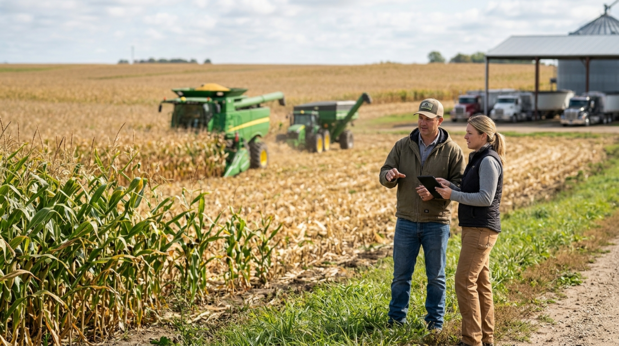
Recent farmland sales in Stark County, Illinois; Worth County, Iowa; Grant County, Wisconsin; and Bourbon County, Kansas, have provided new insights into the agricultural land market in the Midwest. These transactions not only reflect current trends in farmland values but also highlight the ongoing investment and interest in American agriculture. As land prices continue to fluctuate, understanding these sales can be beneficial for farmers, investors, and local communities alike.
In Stark County, Illinois, a recent sale of 101.7 tillable acres fetched $15,300 per acre, underscoring the demand for high-quality farmland. The land’s strong NCCPI rating of 82.7, combined with a history of robust corn and soybean yields, illustrates the agricultural potential that attracts buyers. Such sales contribute to the overall stability and growth of the local agricultural economy, suggesting that farmers and investors see value in land that can produce reliable crops.
Similarly, Worth County, Iowa, has seen notable transactions that reflect a competitive market. The ongoing interest in farmland in this region indicates a broader trend of investment in agricultural infrastructure. Investors are increasingly recognizing that farmland not only serves as a crucial resource for food production but also as a valuable asset in a diversified investment portfolio.
Grant County, Wisconsin, has also experienced significant farmland sales that contribute to the narrative of agricultural resilience. As more individuals and entities invest in land, it signals a belief in the long-term viability of farming in the area. This trend can help bolster local economies and sustain jobs in agriculture, which is vital for community stability.
Bourbon County, Kansas, rounds out the picture with its recent sales, demonstrating that interest in farmland is not confined to traditional agricultural states. The diverse range of buyers and the competitive prices achieved in these sales reflect a healthy interest in land as a critical component of the agricultural supply chain. This trend may also encourage further investment in local infrastructure, supporting farmers and related businesses.
While challenges such as fluctuating commodity prices and climate variability persist, the recent sales data indicates a robust interest in farmland that could enhance production capacity and economic resilience in these regions. The ongoing transactions are not merely numbers; they represent a commitment to agriculture and the communities that depend on it.
As the agricultural landscape continues to evolve, these sales highlight the importance of farmland as both a resource and an investment opportunity. They suggest a growing recognition of the value of agricultural land, which could lead to increased support for local farming initiatives and infrastructure improvements. This aligns with broader trends in American industry aimed at strengthening supply chains and enhancing food security.
In conclusion, the recent farmland sales in Illinois, Iowa, Wisconsin, and Kansas offer a glimpse into the dynamic agricultural market in the Midwest. The transactions reflect ongoing investment and interest in farmland, underscoring its importance to local economies and the broader agricultural sector. As these trends continue, they may foster resilience and growth within American agriculture, ultimately benefiting farmers, investors, and communities alike.