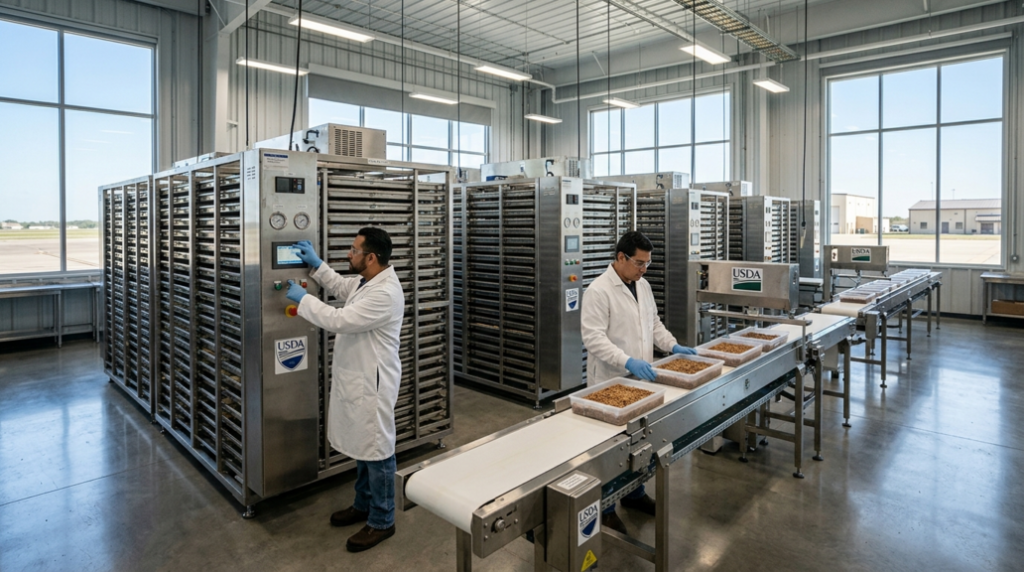
The United States Department of Agriculture (USDA) announced that the new sterile fly production facility in Texas, designed to combat the New World screwworm parasite, will open ahead of schedule in spring 2027. The facility, situated at Moore Air Base in Edinburg, Texas, was originally slated to open by the end of 2027.
This development marks a significant milestone in the national effort to control and eradicate the New World screwworm, a parasitic fly that poses a serious threat to livestock health and agricultural economies. The sterile insect technique involves breeding and releasing millions of sterilized screwworm flies, which mate with wild populations but produce no offspring, thereby reducing the parasite’s numbers.
The USDA has highlighted that the new facility will initially produce an estimated 100 million sterile flies per week, with a longer-term capacity goal of 300 million weekly by the end of 2028. This level of production represents a major scale-up compared to prior efforts and is expected to strengthen U.S. defenses against screwworm infestations, which can cause severe damage to cattle and other animals.
While a separate sterile fly dispersal center in Edinburg is already operational, the new production plant under construction is central to increasing domestic sterile fly availability. Previously, the U.S. has relied in part on international sources for sterile flies, so this facility will reduce dependency on foreign production and enhance rapid response capability. The project, valued at approximately $750 million and in partnership with the U.S. Army Corps of Engineers, also supports local manufacturing and workforce engagement in the region.
The accelerated timeline reflects progress in construction and project management, underscoring priorities to address the growing threat of screwworm infestations, which can have significant economic impacts on the livestock industry and rural communities.
Overall, the upcoming operational status of the Texas sterile fly production facility points to strengthened U.S. industrial capacity in agricultural biosecurity and reinforces ongoing efforts to safeguard the health of American livestock and the vitality of agricultural supply chains.