
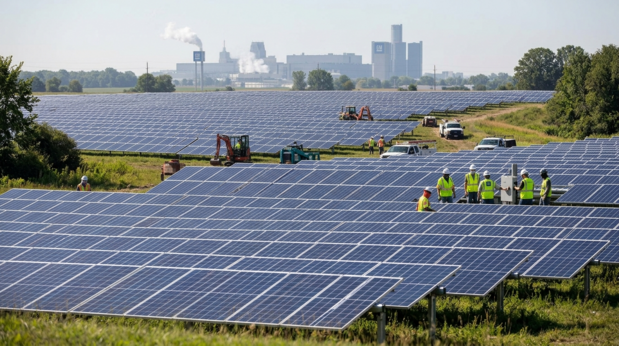
General Motors is investing $550 million in solar projects that the automaker says could generate as much electricity each year as three of its Michigan assembly plants use. The investment could give the company another source of renewable power for manufacturing while helping reduce emissions tied to its operations. It also connects a large industrial buyer with new electricity generation, an increasingly important consideration as factories work to manage energy use and emissions.
GM has not provided details in the available announcement about the projects’ locations, construction schedules or generating capacity. The company’s comparison describes annual electricity output, not a guarantee that solar power will supply the plants at every hour. Solar generation depends on daylight and weather, so the relationship between project output and factory demand can differ from one moment to the next.
Even with that distinction, the scale of the investment points to the role energy procurement can play in manufacturing. Assembly plants use electricity for equipment, lighting, material handling and other operations, and reliable power is essential to keeping production moving. Adding renewable generation to a company’s energy portfolio could help address emissions while supporting the substantial electricity needs of industrial facilities.
The investment also illustrates how manufacturers can support energy projects beyond the factory gate. A company’s decision to commit capital to solar development can help bring additional generation onto the broader electricity system, although the practical benefits depend on project execution and how the power is delivered or accounted for. For GM, the stated annual output comparison offers a way to relate the projects’ expected production to familiar manufacturing operations.
The projects are part of a wider industrial challenge: companies are seeking to reduce the emissions associated with production without compromising dependable operations. That balance matters in automotive manufacturing, where facilities must coordinate complex processes and maintain consistent output. Renewable electricity can contribute to emissions goals, while energy planning must still account for when power is available and what factories require.
The $550 million commitment is a substantial capital allocation, but the announcement alone does not establish when the solar projects will begin operating or how much emissions reduction they will deliver. Those outcomes will depend on project details and actual generation. The investment nevertheless signals continued corporate spending on energy infrastructure tied to manufacturing, rather than treating electricity solely as an operating expense.
For Michigan, the comparison underscores the amount of energy required to run major assembly operations and the potential for new generation to serve industrial demand. If the projects deliver the annual output GM describes, they could help expand renewable electricity available to support the company’s operations and emissions efforts. The next measure will be how quickly that planned investment becomes working generation and how effectively it fits the needs of the plants.