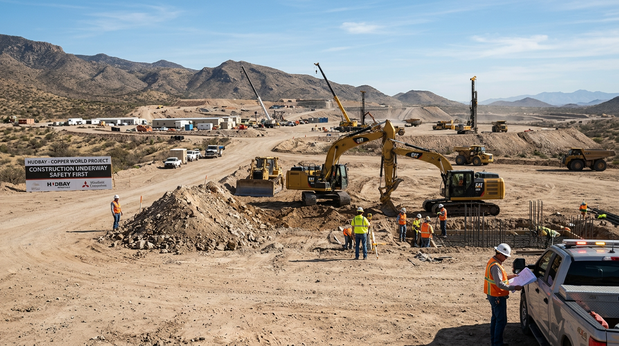
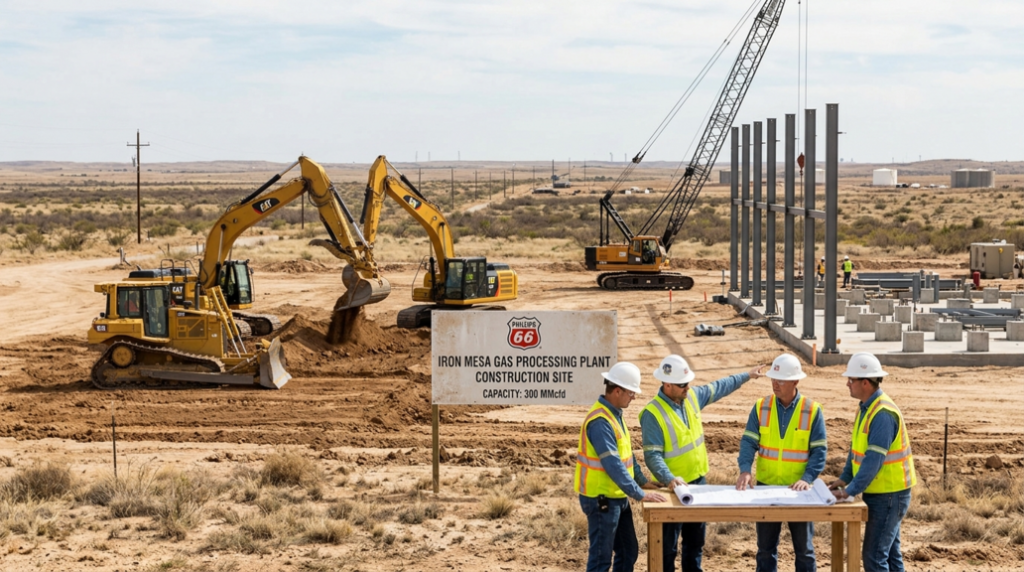
Phillips 66 has officially commenced construction on its Iron Mesa gas processing plant located near Goldsmith in Ector County, Texas, a key development to expand gas processing capacity in the Permian Basin. The new facility, with a capacity of 300 million cubic feet per day (MMcfd), is scheduled to come online in the first quarter of 2027, supporting both Delaware and Midland basin production.
Situated adjacent to the company’s existing 160 MMcfd gas plant in Goldsmith, the Iron Mesa project represents a significant step in Phillips 66’s midstream growth strategy aimed at integrating natural gas liquids (NGL) production from the Permian Basin with downstream processing and fractionation assets. This investment reflects ongoing industry trends, as rising associated gas volumes from oil production areas generate increasing demand for processing infrastructure.
Phillips 66 executives have emphasized that the Iron Mesa plant will operate under a fee-based business model, providing operational and cost efficiency benefits. The project also involves upgrades and partial retirement of aging sections of the current Goldsmith facility, thereby enhancing overall reliability and processing performance in the region.
The location advantage of Iron Mesa allows Phillips 66 to gather and process feedstock from both major sub-basins of the Permian, Delaware and Midland, helping to streamline logistics and improve throughput flexibility. This is especially important given the Permian Basin’s central role in U.S. hydrocarbon supply growth over the coming years.
In parallel to Iron Mesa, Phillips 66 is advancing additional Permian midstream projects. Notably, the Zeus Gas Plant, a separate 300 MMcfd facility coupled with the 45-mile Midland Express (MEX) pipeline, is expected to begin operations in 2028. These projects collectively underscore Phillips 66’s commitment to expanding its integrated gas processing and natural gas liquids infrastructure across the Permian Basin and into the U.S. Gulf Coast.
The Iron Mesa project’s progress highlights the continuing investment cycle required to keep pace with production increases and supply chain demands in one of America’s most productive shale plays. As the plant reaches startup, operators and industrial stakeholders will be watching closely for its impact on regional processing capacity and market dynamics.