
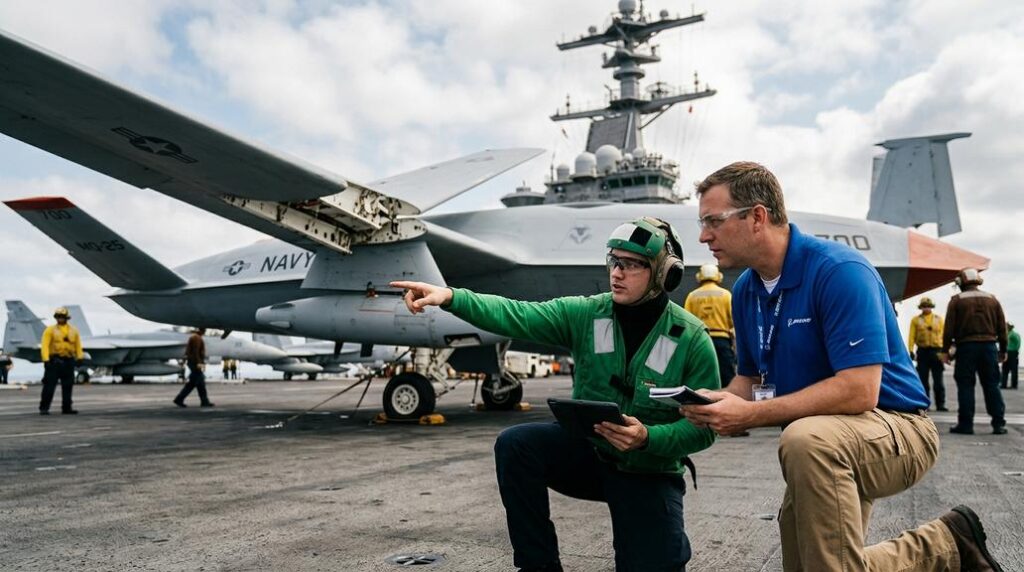
The U.S. Navy has officially authorized the MQ-25A Stingray to enter low-rate initial production (LRIP), a significant development for the unmanned aerial refueling program. This decision follows the program’s achievement of Milestone C approval, a necessary step for transitioning from engineering and manufacturing development to production. The initial contract for LRIP Lot 1 is expected to be awarded this summer, focusing on the production of three aircraft.
The MQ-25A Stingray, developed by Boeing, is designed to enhance the operational capabilities of the Navy’s carrier strike groups by providing aerial refueling support to various aircraft. This program, with an estimated total cost of $15.9 billion, underscores the Navy’s commitment to modernizing its fleet and improving mission effectiveness. Each aircraft is projected to cost around $209 million, reflecting the advanced technology and capabilities being integrated into this new system.
The production phase is anticipated to have a positive impact on American industry, particularly within the defense sector. The initiative could create jobs and support skilled work, as companies involved in the program ramp up production capabilities. This development is part of a broader trend of modernization in military assets, which often leads to increased demand for specialized labor and advanced manufacturing techniques.
The MQ-25A is expected to play a critical role in enhancing the Navy’s refueling capabilities, allowing for more efficient operations and extended range for carrier-based aircraft. This advancement not only improves military readiness but also strengthens the United States’ position in global defense strategies. As the program progresses, it could lead to further investments in domestic manufacturing and technology development.
In addition to its strategic military implications, the Stingray program reflects ongoing efforts to integrate unmanned systems into military operations. As the Navy continues to explore the potential of unmanned technologies, the success of the MQ-25A could pave the way for additional innovations in the field. This shift towards automation and advanced systems may influence future military procurement strategies and operational frameworks.
As the contract for LRIP Lot 1 is set to be awarded, the Navy and Boeing are expected to collaborate closely to ensure a smooth transition into production. This partnership is crucial for addressing any challenges that may arise during the manufacturing process. Ensuring quality and performance standards will be essential as the program moves forward.
Overall, the authorization of the MQ-25A Stingray for low-rate initial production marks an important step in enhancing the Navy’s operational capabilities while also supporting American industry. The focus on advanced technologies and unmanned systems could contribute to a more robust industrial base, which is vital for maintaining national security and technological leadership in defense.
As the production phase begins, stakeholders in the defense sector will be closely monitoring the program’s progress, looking for opportunities to enhance operational effectiveness and support local economies through job creation and investment in high-tech capabilities.