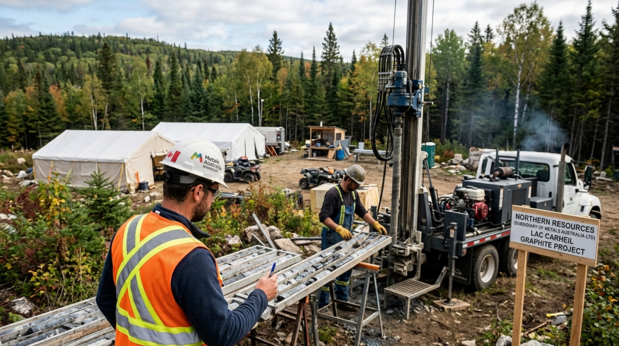
Metals Australia’s Canadian subsidiary, Northern Resources, has recently announced promising results from a prefeasibility study (PFS) for its Lac Carheil graphite project in Québec. This study confirms the viability of a proposed flake graphite concentrate plant, which could play a significant role in bolstering North American and global battery supply chains. The development of this project is particularly relevant as industries increasingly seek reliable sources of materials essential for electric vehicle batteries and renewable energy technologies.
Graphite is a critical component in the production of lithium-ion batteries, which power electric vehicles and various electronic devices. As demand for these technologies continues to rise, the need for a stable supply of high-quality graphite has become increasingly important. The results of the PFS indicate that the Lac Carheil project could not only meet this demand but also enhance the resilience of supply chains that are vital for American industry.
The prefeasibility study highlights the project’s potential for strong economic returns, which is encouraging for investors and stakeholders in the mining sector. By confirming the feasibility of the mine and processing plant, Northern Resources has taken a significant step toward advancing the project into the next phases of development. This could lead to job creation and economic activity in the region, supporting local communities and contributing to the broader economy.
Located near Fermont, Québec, the Lac Carheil project is strategically positioned to serve both North American and international markets. The study outlines plans for a flake graphite concentrate plant that could increase production capacity and efficiency. This aligns with ongoing efforts to modernize and expand mining operations in North America, which are essential for meeting the growing needs of the battery manufacturing sector.
Moreover, the project underscores the importance of securing domestic sources of critical minerals. As the United States and Canada work toward reducing reliance on foreign supply chains, initiatives like the Lac Carheil project could enhance national security in terms of resource availability. This is particularly relevant in light of geopolitical tensions and supply chain disruptions that have affected various industries.
While the PFS results are promising, the project will still face challenges as it moves forward. Regulatory approvals, environmental assessments, and financing will all play crucial roles in determining the timeline for development. However, the positive findings of the PFS indicate a clear pathway for advancing the project, which could ultimately contribute to a more robust and sustainable supply of graphite for the future.
In conclusion, the strong results from the prefeasibility study for the Lac Carheil graphite project represent a significant development in the mining sector. By positioning itself to support future battery supply chains, the project reflects ongoing momentum in American industry and highlights the potential for growth and investment in critical mineral resources. This advancement not only benefits the local economy but also strengthens the broader supply chain that is essential for the transition to cleaner energy technologies.