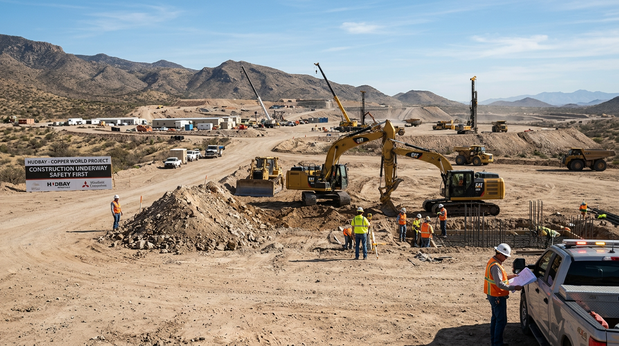
Hudbay Minerals and Mitsubishi Corporation have officially approved the construction of the Copper World project in Arizona, marking a significant development in the U.S. mining sector. This project is expected to increase annual copper production by 11% over the first decade, which could have meaningful implications for American industry and supply chains, particularly in the context of rising demand for copper in various sectors, including renewable energy and electric vehicles.
The Copper World project represents a strategic investment in domestic mining capabilities. As industries across the U.S. increasingly focus on sustainability and reducing reliance on foreign minerals, this project could enhance the availability of copper, a critical resource for modern technologies. The decision to move forward follows a comprehensive feasibility study, indicating confidence in the project’s viability and long-term benefits.
Copper is a key component in the production of electrical wiring, electronics, and renewable energy technologies. With the expected production increase from the Copper World project, the U.S. could see bolstered supply chains that support various industries, from construction to technology. This growth aligns with broader efforts to secure domestic sources of essential materials, reducing vulnerabilities tied to global supply chain disruptions.
The project is also anticipated to create numerous job opportunities in the local community and beyond. Construction and operational roles will likely provide employment for skilled workers in the region, contributing to economic stability and growth. The project’s development underscores the importance of investing in local infrastructure and workforce capabilities, which can have lasting benefits for surrounding communities.
Moreover, the Copper World project is part of a larger trend toward modernization in the mining industry. As companies invest in new technologies and sustainable practices, they are not only enhancing production capacity but also improving environmental stewardship. This project aims to incorporate advanced mining techniques that could minimize ecological impacts, a significant consideration in today’s regulatory environment.
Despite the positive outlook, there are challenges ahead, including potential regulatory hurdles and market fluctuations that could affect the project’s timeline and budget. However, the commitment from both Hudbay and Mitsubishi to proceed indicates a strong belief in the project’s potential to navigate these challenges successfully.
Overall, the approval of the Copper World project is a noteworthy step for the U.S. mining industry. It reflects ongoing efforts to enhance domestic production capabilities and secure essential resources for future growth. As the construction phase begins, the project has the potential to contribute positively to the local economy while supporting broader national goals around sustainability and resilience in supply chains.
In conclusion, the Copper World project is poised to play a vital role in addressing the increasing demand for copper in various industries. As it progresses, it could not only strengthen local economies but also reinforce the U.S.’s position in the global market for critical minerals, showcasing the importance of investment in domestic mining operations.