Shipbuilders along U.S. Route 90 in southern Louisiana are actively competing for contracts to construct unmanned vessels for the U.S. Navy. This initiative not only highlights the region’s capabilities in advanced technology but also underscores its role in bolstering American industry. With significant investments in shipbuilding and a focus on innovation, these shipyards are positioning themselves to meet the evolving demands of naval warfare.
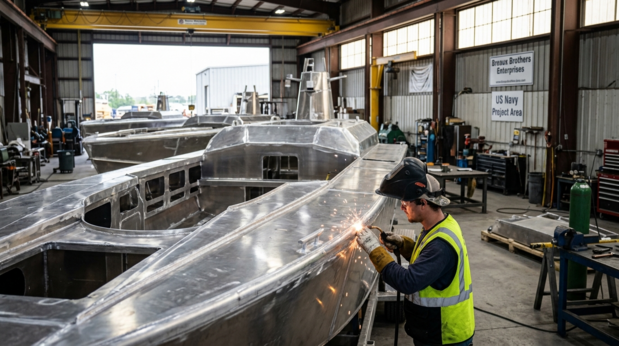
At Breaux Brothers Enterprises, four aluminum Romulus vessels are currently under production. These vessels are part of a broader strategy by the Navy to expand its fleet of unmanned ships, which are expected to enhance operational capabilities while potentially reducing costs. The emphasis on unmanned technology reflects a shift in military strategy, and local shipbuilders are eager to contribute to this transformation.
The competition among Louisiana shipyards is indicative of a larger trend in the defense industry, where modernization and efficiency are paramount. As the Navy seeks to integrate more autonomous systems into its operations, shipbuilders are investing in new technologies and processes that will allow them to deliver these advanced vessels more rapidly. This not only enhances production capacity but also supports job creation and workforce development in the region.
In addition to Breaux Brothers, other shipyards along Route 90 are also vying for a piece of the action. Their efforts reflect a concerted push towards innovation in shipbuilding, which is crucial as the defense sector adapts to new technological realities. The potential contracts could lead to significant economic benefits for local communities, providing stable employment opportunities and reinforcing the region’s reputation as a hub for maritime industry.
The drive for unmanned vessels aligns with broader trends in defense spending and military readiness. The U.S. Navy’s commitment to enhancing its fleet with advanced technology is a clear signal of its focus on maintaining a strategic edge. As these ships are designed and built, they could also support the supply chain by generating demand for materials, components, and skilled labor, further integrating local economies into national defense initiatives.
While challenges remain in the competitive bidding process, the active involvement of Louisiana shipyards in this cutting-edge sector demonstrates their resilience and adaptability. The ongoing production of unmanned vessels not only contributes to national security but also reflects a growing recognition of the importance of local industry in supporting federal initiatives.
Overall, the efforts of Louisiana shipbuilders to secure contracts for the Navy’s future drone fleet represent a critical development in American manufacturing and defense capabilities. By embracing the challenges and opportunities presented by this shift towards autonomous vessels, these shipyards are not only enhancing their own operational frameworks but also contributing to a more robust and technologically advanced military.
As the competition unfolds, the collaboration between the Navy and local shipyards could pave the way for further innovations in maritime technology. This ongoing partnership is essential for ensuring that the United States maintains its leadership position in defense and manufacturing, ultimately benefiting both the industry and the communities that support it.