
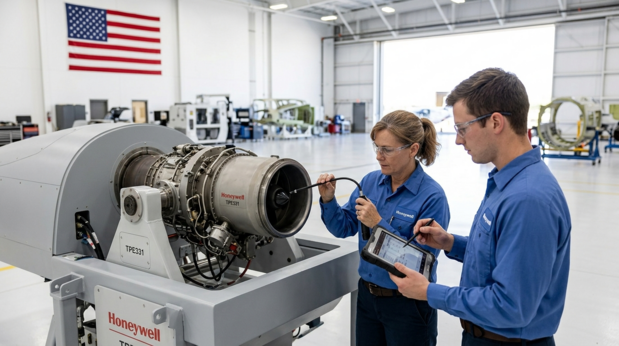
Honeywell Aerospace is advocating for an early contract award in the U.S. Air Force’s Massed Modular Aircraft (MMA) program, a move that reflects the company’s significant role in the aerospace sector. The MMA program aims to enhance the U.S. military’s operational capabilities through innovative aircraft solutions. By positioning its TPE331 engine as a key component for competitors in this program, Honeywell underscores the importance of domestic manufacturing and technological advancement in defense initiatives.
The TPE331 engine, known for its reliability and performance, has become a preferred choice among various contractors vying for the MMA program. This trend not only highlights Honeywell’s strong presence in the aerospace industry but also points to the broader significance of American innovation in military applications. As the U.S. seeks to modernize its defense capabilities, the integration of advanced technologies like the TPE331 engine could play a crucial role in maintaining operational readiness and effectiveness.
Investments in aerospace technologies are vital for sustaining the U.S. military’s competitive edge. The MMA program represents a strategic initiative to leverage cutting-edge engineering and manufacturing practices. By encouraging early contract discussions, Honeywell aims to streamline the procurement process, which could lead to enhanced efficiency in production and deployment of new aircraft systems.
Moreover, the emphasis on American-made components in defense contracts supports local economies and skilled labor. As companies like Honeywell continue to invest in advanced aerospace technologies, they contribute to job creation and workforce development in the high-tech manufacturing sector. This not only aids in sustaining existing jobs but also fosters the growth of a skilled workforce equipped to meet the demands of modern aerospace challenges.
The push for early contracts also reflects a strategic alignment with the U.S. government’s goals for rapid technological advancement in defense. As global threats evolve, the ability to quickly deploy new aircraft systems becomes increasingly critical. Honeywell’s proactive approach may facilitate a faster transition from development to operational use, thereby enhancing the overall resilience of U.S. defense capabilities.
While challenges such as budget constraints and competition from other aerospace firms exist, the current landscape remains promising. The focus on innovation and early procurement could help mitigate risks associated with delays in defense projects. By fostering collaboration between government and industry, stakeholders can work toward ensuring that the U.S. military has access to the most advanced technologies available.
In conclusion, Honeywell’s call for early contract negotiations in the MMA program highlights a significant moment for American aerospace. It reflects ongoing investments in defense innovation and the importance of domestic manufacturing. As the aerospace sector continues to evolve, developments like these demonstrate a commitment to enhancing national security while supporting local economies and skilled labor within the industry.