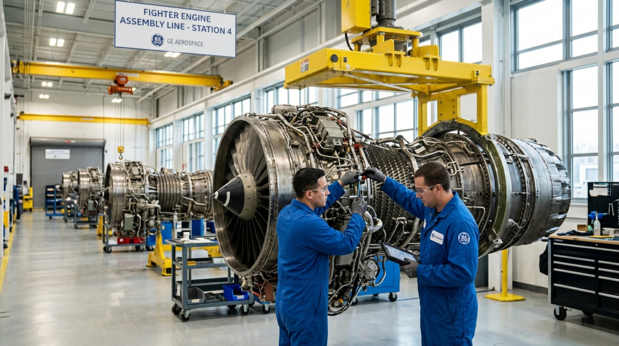
GE Aerospace has announced plans to double its production of fighter engines by 2032, a move that reflects a significant effort to enhance its manufacturing capabilities amid ongoing supply chain challenges. This initiative is expected to not only streamline production processes but also bolster the company’s position within the competitive aerospace sector, which is crucial for national defense and technological advancement.
The decision to ramp up production comes as GE Aerospace seeks to overcome recent bottlenecks that have affected various segments of the industry. By implementing wholesale improvements to its production systems, the company aims to increase the assembly of fighter, trainer, and helicopter engines. Such enhancements could lead to greater efficiency and reliability in meeting defense contracts, which are vital for maintaining the operational readiness of military forces.
Increasing engine production capacity is particularly significant in the context of rising global defense demands. With geopolitical tensions influencing military procurement strategies, the ability to produce more engines could support the U.S. military’s operational needs and ensure that American defense contractors remain competitive on the global stage. This move also underscores the importance of domestic manufacturing in securing supply chains that are crucial for national security.
In addition to addressing immediate production challenges, GE Aerospace’s strategy represents a long-term commitment to modernization and investment in American manufacturing. The company’s focus on enhancing production capabilities not only reflects a proactive approach to supply chain management but also signals a broader trend of revitalizing U.S. industrial capacity. This could foster job creation in skilled labor sectors, as increased production often necessitates a larger workforce and specialized training.
The aerospace industry has historically been a cornerstone of American innovation and economic strength. GE Aerospace’s initiative to double production aligns with ongoing efforts to enhance the overall resilience of the aerospace supply chain. As companies like GE invest in technology and workforce development, they contribute to a more robust industrial ecosystem that can adapt to new challenges and demands.
While challenges remain, including potential fluctuations in material costs and labor availability, GE Aerospace’s determination to expand its production capabilities points to a positive trajectory for the industry. This development not only supports the company’s growth but also reinforces the importance of maintaining a reliable supply chain for critical defense materials.
As GE Aerospace moves forward with its plans, the implications for local communities and the broader economy could be substantial. Increased production often leads to enhanced local investment and opportunities for skilled workers, which can stimulate economic growth in regions where aerospace manufacturing is a key industry.
In conclusion, GE Aerospace’s plans to double fighter engine production by 2032 are indicative of a broader commitment to strengthening American manufacturing and supply chains. This initiative not only addresses current challenges but also positions the company—and the U.S. aerospace industry—as a whole—favorably for future growth and competitiveness in an evolving global landscape.