German automotive supplier and technology company Bosch has officially begun sample production at its first semiconductor manufacturing facility in the United States. The plant, located in Roseville, California, marks a significant step for Bosch as it establishes a foothold in domestic chip production, focusing on silicon carbide (SiC) semiconductors critical for electric vehicles.
Bosch acquired the Roseville facility from TSI Semiconductors in 2023 and has been investing approximately $2 billion in transforming and upgrading the site. This investment includes $225 million in direct funding from the U.S. Department of Commerce under the CHIPS Act, a federal initiative aimed at strengthening domestic semiconductor manufacturing. The plant retained nearly all of the 250 employees who worked at the original facility.
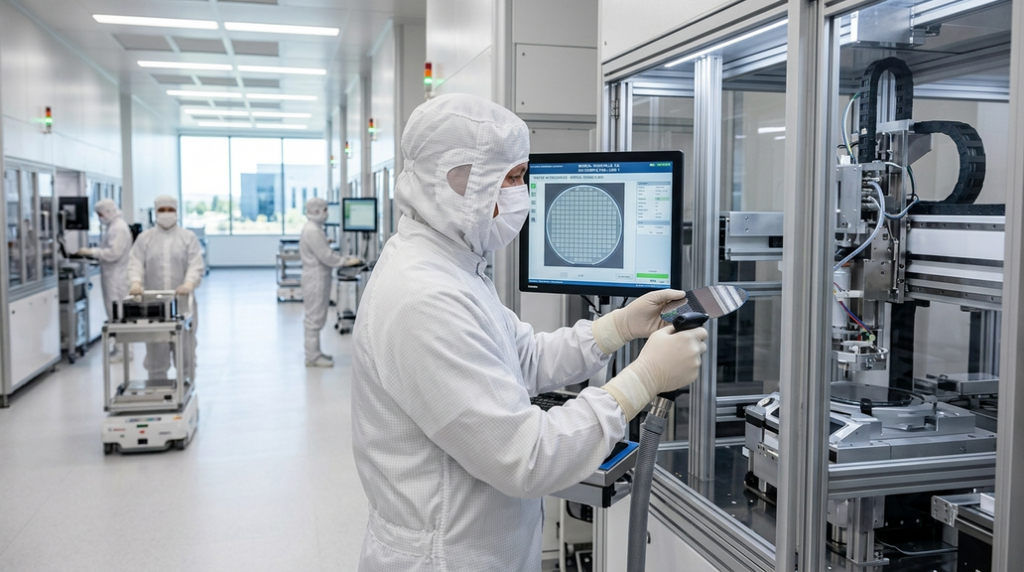
The Roseville site will produce and test silicon carbide semiconductors on 200-millimeter wafers, a size increasingly favored in power electronics manufacturing. SiC chips are integral to improving the efficiency and range of electric vehicles by enabling better power management than traditional silicon-based semiconductors.
Bosch plans to transition from sample production to full commercial output later in 2026. This U.S. facility supplements Bosch’s existing SiC semiconductor production in Dresden, Germany. It will handle both front-end wafer fabrication and backend testing, sorting, and dicing operations.
This development reflects Bosch’s broader industrial strategy to enhance its supply chain resilience and increase production capacity in semiconductor technologies essential for electrified mobility. The Roseville plant adds to the growing network of U.S. chip manufacturing facilities supported by federal policies that seek to reduce dependence on foreign supply chains.
As electric vehicle adoption accelerates in the United States, the need for reliable sources of advanced power semiconductors grows. Bosch’s investment in Roseville contributes to expanding the domestic manufacturing base for these critical components and underscores the increasing convergence of auto and semiconductor industries in the U.S.