
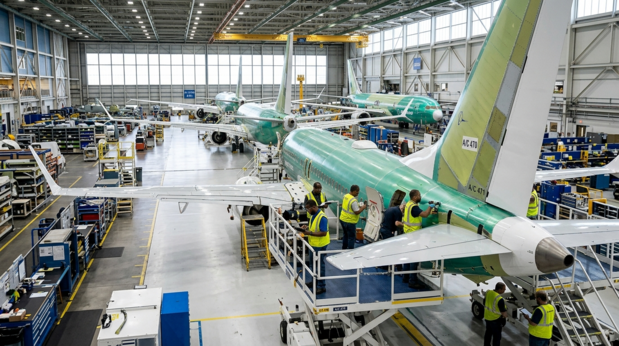
Boeing has reported an 8% increase in aircraft deliveries, totaling 475 by September 2026. This uptick, while still trailing its competitor Airbus in both deliveries and net orders, signals a notable momentum in the aerospace sector. Such growth could enhance the overall competitiveness of American manufacturing and support skilled jobs within the industry.
The increase in deliveries reflects Boeing’s ongoing efforts to ramp up production and meet the rising demand for air travel. As global air traffic continues to recover, airlines are seeking to modernize their fleets with more efficient aircraft. This demand not only highlights the strength of the aerospace market but also underscores Boeing’s commitment to adapting to changing industry needs.
Boeing’s growth trajectory is crucial for the American workforce, particularly in regions where aerospace manufacturing is a significant economic driver. The increase in aircraft deliveries may lead to expanded job opportunities in engineering, assembly, and support roles, reinforcing the importance of skilled labor in this high-tech industry. The ripple effect of Boeing’s production capabilities can be felt in local communities, where supplier networks and service providers also benefit from increased activity.
Moreover, the aerospace industry plays a vital role in the broader context of American manufacturing. As Boeing strives to enhance its production capacity, it also invests in innovation and technology, which can lead to improved efficiencies and reduced environmental impacts. These advancements are essential as the industry navigates challenges related to sustainability and regulatory compliance.
Despite trailing Airbus in the current market, Boeing’s recent performance reflects a strategic response to competitive pressures. By increasing its delivery numbers, the company is positioning itself to capture future growth opportunities, particularly as air travel demand is projected to rise significantly in the coming years. This proactive approach may also inspire confidence among investors and stakeholders in the aerospace sector.
The outlook for Boeing remains cautiously optimistic. While challenges remain, including supply chain constraints and the need for continued modernization, the company’s recent success in increasing deliveries suggests a pathway toward recovery and growth. As Boeing continues to navigate the complexities of the aerospace market, its ability to deliver aircraft efficiently will be critical in maintaining its standing in the industry.
Overall, Boeing’s increase in aircraft deliveries is a positive indicator for the aerospace industry and American manufacturing. It reflects the capacity for growth and resilience in the face of challenges, while also highlighting the essential role of skilled labor in supporting this vital sector. As the industry evolves, Boeing’s commitment to enhancing its production capabilities could lead to further advancements that benefit both the economy and local communities.
In conclusion, the recent uptick in aircraft deliveries by Boeing marks an important step in revitalizing the aerospace industry. This growth not only bolsters American competitiveness but also reinforces the significance of skilled work and investment in future production capabilities. As the market continues to evolve, Boeing’s ability to adapt and grow will be key to its success and the broader health of the aerospace sector.