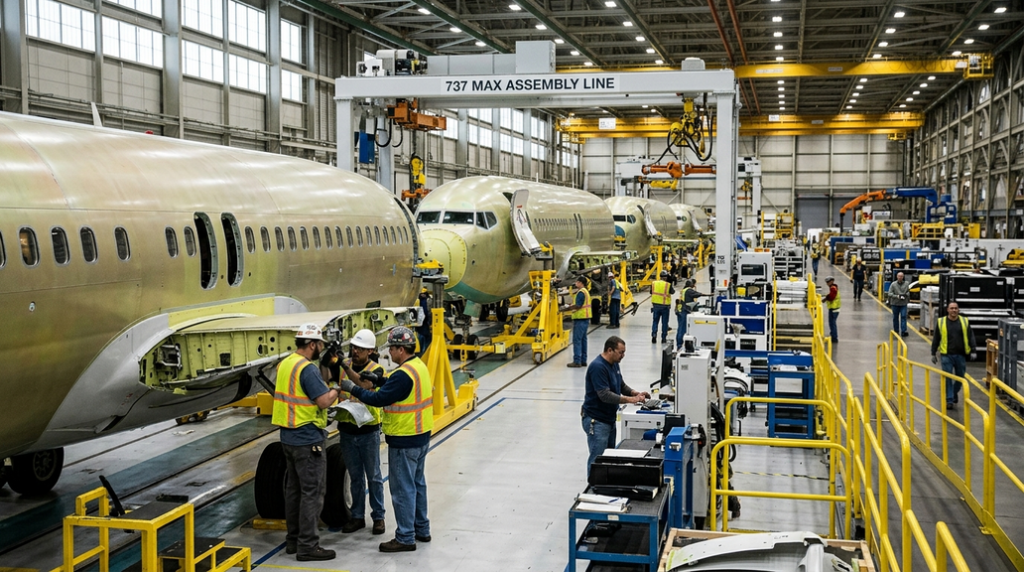
Boeing has begun production on a new assembly line for the 737 MAX aircraft at its Everett, Washington factory, marking a notable step in expanding its manufacturing operations. This new line focuses on the 737 MAX 10 variant and is supported by facility upgrades and new tooling, positioning Boeing to increase its production capacity in response to growing demand.
The company has started hiring extensively to staff the new assembly line, with reports indicating plans to create approximately 2,500 construction jobs during the build-out phase and around 1,000 permanent manufacturing roles over the next five years. The hiring surge reflects Boeing’s confidence in the ongoing demand for the 737 MAX family, which includes improved fuel efficiency and quieter operation compared to previous models.
Production on this new line awaits final FAA certification for the 737 MAX 10, but Boeing has simultaneously raised production rates on its existing Renton assembly line from 42 to 47 aircraft per month, demonstrating a broader ramp-up in output.
Beyond the factory floor, Boeing’s operations have a substantial economic footprint. The company reports that its activities support 1.4 million jobs across the United States, both directly and indirectly. Boeing also contributes approximately $97 billion annually to the U.S. economy through its operations, supplier network, and workforce spending. Supplier spend alone accounts for about $35 billion each year, underscoring Boeing’s role in sustaining American manufacturing beyond its own facilities.
The new assembly line and ramped-up production are thus significant beyond immediate factory jobs. They form part of a larger picture of industrial investment and workforce development in American aerospace manufacturing, which remains a critical sector in the U.S. economy.