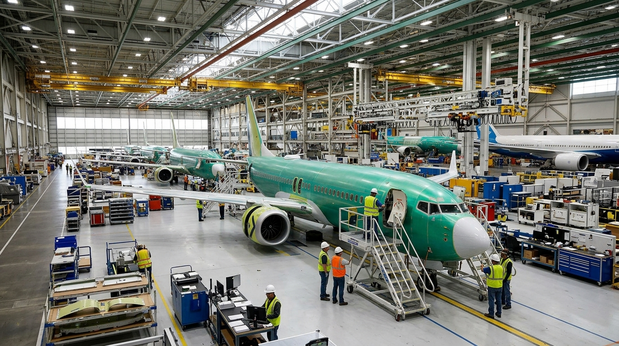
Boeing has recently opened a fourth final assembly line for its 737 MAX aircraft in Everett, Washington, a move that aims to enhance production capacity and address a significant backlog of orders. This expansion reflects Boeing’s ongoing commitment to efficient manufacturing and positions the company to better meet the increasing demand in the aerospace sector.
The new assembly line, known as the North Line, is designed to streamline the production process for single-aisle aircraft, which are crucial for both domestic and international airlines. With the aviation industry recovering from the impacts of the pandemic, the demand for new aircraft has surged, prompting Boeing to take strategic steps to bolster its output. By increasing production capabilities, the company is not only working to fulfill existing orders but also to ensure it can respond to future market needs.
This expansion is particularly significant in light of Boeing’s recent challenges, including production delays and quality control issues that have affected the 737 MAX series. With the introduction of the North Line, Boeing aims to enhance its operational reliability and efficiency, which could help restore confidence among its customers and stakeholders. The new line is expected to support a more consistent output, thereby contributing to the overall stability of the supply chain in the aerospace industry.
In conjunction with this expansion, Boeing has made substantial investments in modernizing its facilities and upgrading technology. These improvements are not only intended to increase production capacity but also to enhance the quality of the aircraft being manufactured. By integrating advanced manufacturing techniques, Boeing is positioning itself to remain competitive in a rapidly evolving market.
The establishment of the North Line also underscores the importance of the aerospace manufacturing sector to the American economy. As Boeing ramps up its production, it is likely to create additional jobs and support local communities in the Everett area and beyond. The increased activity at the assembly line could lead to a ripple effect, benefiting suppliers and service providers throughout the region.
While challenges remain, including ongoing supply chain pressures and labor market fluctuations, the opening of the new assembly line represents a constructive step forward for Boeing. It highlights the company’s resolve to adapt to changing market conditions and to invest in its future. Moreover, this development may signal a broader recovery in the aerospace industry, which is crucial for economic growth and job creation.
As the aviation sector continues to rebound, Boeing’s expansion efforts reflect a proactive approach to maintaining its leadership position. The new production line not only adds capacity but also reinforces the company’s dedication to meeting customer needs and improving operational efficiency. With these advancements, Boeing is better equipped to navigate the complexities of the aerospace market and contribute positively to the American industrial landscape.
In conclusion, the opening of the fourth 737 MAX assembly line in Everett is a noteworthy development for Boeing and the aerospace industry as a whole. It illustrates the company’s commitment to enhancing production capabilities and addressing market demands while also supporting local economies and the broader American workforce. As production ramps up, the potential benefits for workers, suppliers, and communities become increasingly evident, marking a significant step in the ongoing evolution of the aerospace sector.