
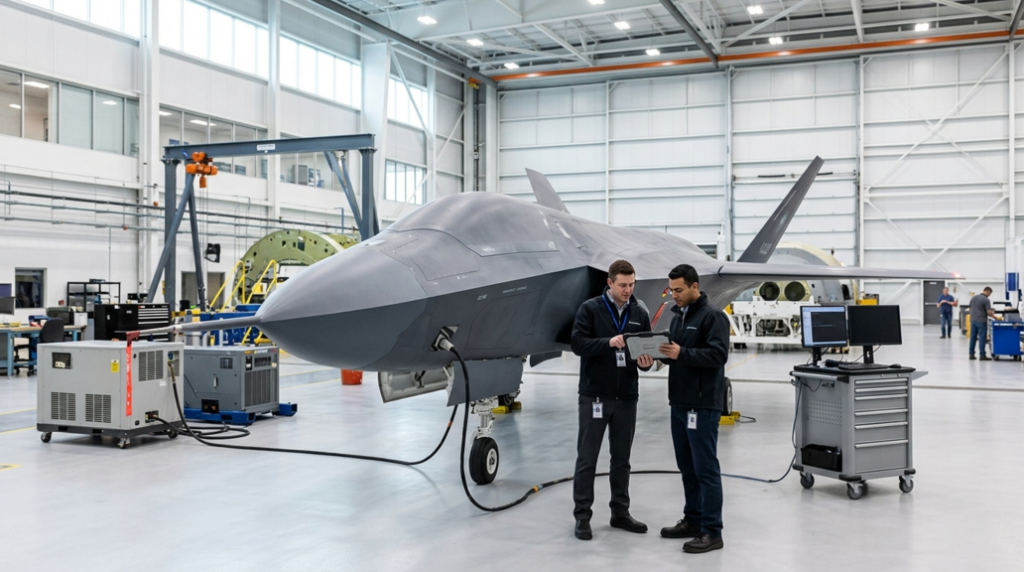
Boeing has confirmed the successful validation of the stealth capabilities of its MQ-28 Ghost Bat collaborative combat aircraft. This milestone was announced in a recent press release and highlights the advanced technology that is being integrated into this next-generation unmanned platform. The MQ-28 is designed to operate alongside crewed aircraft, enhancing mission effectiveness in various operational environments.
The testing, conducted at Boeing’s facility in Brisbane, Australia, demonstrated the aircraft’s reduced radar detectability, which is critical for stealth operations. This capability allows the MQ-28 to perform reconnaissance and strike missions with a lower risk of detection by enemy radar systems. Such advancements could bolster the United States’ defense capabilities, particularly as military strategies increasingly emphasize the use of unmanned systems.
The MQ-28 Ghost Bat is part of a broader trend in the aerospace industry towards developing unmanned aerial vehicles (UAVs) that can operate in complex environments. These aircraft are engineered to support and enhance the capabilities of traditional crewed platforms, potentially leading to more efficient and effective military operations. The successful testing of the MQ-28 underscores Boeing’s commitment to innovation in defense technology.
Boeing’s work on the MQ-28 is significant not only for military applications but also for the aerospace sector as a whole. The development of advanced UAVs could stimulate growth within the American aerospace industry, creating opportunities for skilled workers and supporting jobs in engineering, manufacturing, and technology sectors. As defense contracts evolve to include more sophisticated systems, the demand for specialized knowledge and skills in these areas may increase.
The MQ-28’s stealth performance reflects a shift in military tactics, where unmanned systems are becoming integral to modern warfare. By enhancing the survivability of aircraft in contested environments, the Ghost Bat could play a crucial role in future combat scenarios. This aligns with ongoing efforts to ensure that the U.S. military remains technologically superior amid evolving global threats.
Moreover, the successful validation of the MQ-28 could have implications for international defense partnerships. As countries seek to modernize their armed forces, interest in advanced UAV technology is likely to grow. This may lead to increased collaboration and investment in defense technologies, benefiting not just the manufacturers like Boeing, but also the local economies where these technologies are developed and produced.
In conclusion, the validation of the MQ-28 Ghost Bat’s stealth capabilities marks a notable achievement for Boeing and the aerospace industry. As unmanned systems continue to evolve, their integration into military operations may enhance operational effectiveness and contribute to the future landscape of defense strategies. The ongoing development of such technologies reflects a commitment to maintaining a competitive edge in the aerospace sector while supporting skilled jobs in the American workforce.