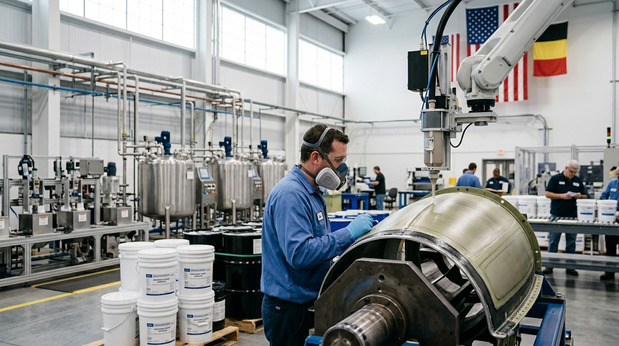
A Belgian adhesive manufacturer is expanding its production capabilities in the United States to meet the increasing demand for advanced adhesive, bonding, and primer materials specifically for the aerospace industry. This decision highlights not only the company’s growth but also its commitment to supporting the American aerospace supply chain, which plays a crucial role in the broader manufacturing landscape.
The expansion comes in response to a notable rise in the aerospace sector, where high-performance materials are essential for ensuring the safety and efficiency of aircraft. As airlines and manufacturers seek to innovate and improve their products, the demand for reliable bonding solutions has surged. By increasing its production capacity, the Belgian company aims to provide these essential materials, thereby contributing to the industry’s ongoing development and resilience.
This move reflects a broader trend within the aerospace industry, which has been experiencing a resurgence as travel demand rebounds post-pandemic. The growth in this sector not only supports job creation but also reinforces the importance of local supply chains. By establishing a stronger presence in the U.S., the company is positioning itself to better serve its clients and respond swiftly to market needs.
Additionally, the expansion may have positive implications for the local economy. Increased production can lead to the creation of skilled jobs, fostering a workforce adept in advanced manufacturing processes. This aligns with the need for skilled labor in the U.S., where industries are increasingly reliant on specialized knowledge and expertise to drive innovation.
The investment in U.S. production facilities underscores the importance of maintaining a robust domestic supply chain, particularly in critical sectors like aerospace. As companies face global supply chain challenges, having production capabilities closer to end-users can enhance reliability and reduce lead times. This development helps ensure that U.S. manufacturers have access to the materials they need without significant delays or disruptions.
While the expansion presents opportunities, it is also important to acknowledge the challenges that come with scaling operations. The company will need to navigate the complexities of hiring and training a workforce while ensuring that production meets the high standards required in the aerospace sector. However, these challenges also represent an opportunity for growth and modernization within the industry.
Overall, the Belgian adhesive maker’s decision to expand in the U.S. reflects a significant step forward for both the company and the aerospace industry at large. By aligning production capabilities with the growing needs of the market, the company is not only enhancing its own competitiveness but also contributing to the stability and advancement of U.S. manufacturing.
As the aerospace industry continues to evolve, developments like this one are crucial. They highlight the ongoing investment in local infrastructure and the importance of fostering a skilled workforce, ensuring that the U.S. remains a leader in aerospace manufacturing and innovation.