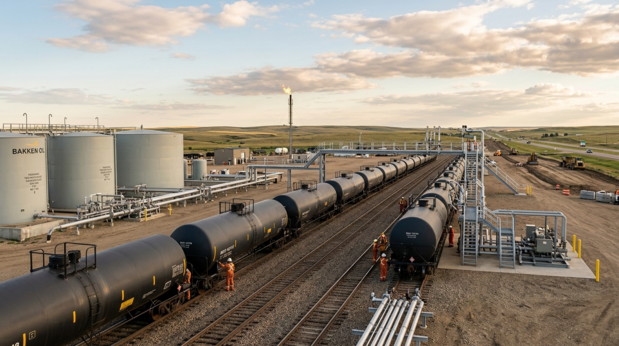
North Dakota’s Bakken region has recently achieved remarkable production milestones, exceeding expectations with longer lateral drilling, consistent rig activity, and quicker cycle times. This impressive performance has led to surpassing state revenue forecasts, underscoring the Bakken’s critical role in American energy production and supply chains. However, this success also highlights an urgent need for infrastructure improvements to sustain and enhance the region’s output.
The Bakken formation has long been recognized for its rich oil reserves, contributing significantly to the United States’ energy independence. With advancements in drilling technology and techniques, operators in the region are now able to extract oil more efficiently than ever before. The use of longer laterals—horizontal drilling that extends further out from the well—has proven particularly effective, allowing for the extraction of more oil from each well and increasing overall production rates.
As production levels rise, so too does the importance of adequate infrastructure to support this growth. The existing infrastructure in North Dakota, while functional, is beginning to show signs of strain under the weight of increased activity. Roads, pipelines, and processing facilities require upgrades to handle the heightened output and ensure that the Bakken can continue to contribute effectively to the national energy landscape.
The ongoing success of the Bakken not only reflects advancements in drilling technology but also points to a broader trend in the oil and gas industry toward increased efficiency and productivity. As companies invest in more sophisticated equipment and techniques, they are also creating a more resilient supply chain that can adapt to fluctuations in demand and market conditions. This adaptability is crucial in an industry that often faces volatility.
Moreover, the economic impact of the Bakken’s growth extends beyond the immediate oil production. Increased activity in the region supports local businesses and creates jobs, contributing to the overall economic health of North Dakota. The demand for skilled labor in drilling, transportation, and processing is likely to remain strong, providing opportunities for workers in the area.
However, the challenges associated with infrastructure lag cannot be overlooked. Without timely investments in roads, pipelines, and other facilities, the Bakken’s growth potential may be hindered. Addressing these infrastructure needs is essential not only for maximizing production but also for ensuring environmental safety and community well-being.
In conclusion, the Bakken’s record-breaking performance serves as a testament to the region’s capabilities and the advancements within the oil and gas sector. While the need for infrastructure improvements presents a challenge, it also offers a clear opportunity for investment and development. By prioritizing these upgrades, stakeholders can help ensure that the Bakken continues to play a vital role in American energy production, benefiting local communities and the broader economy in the process.