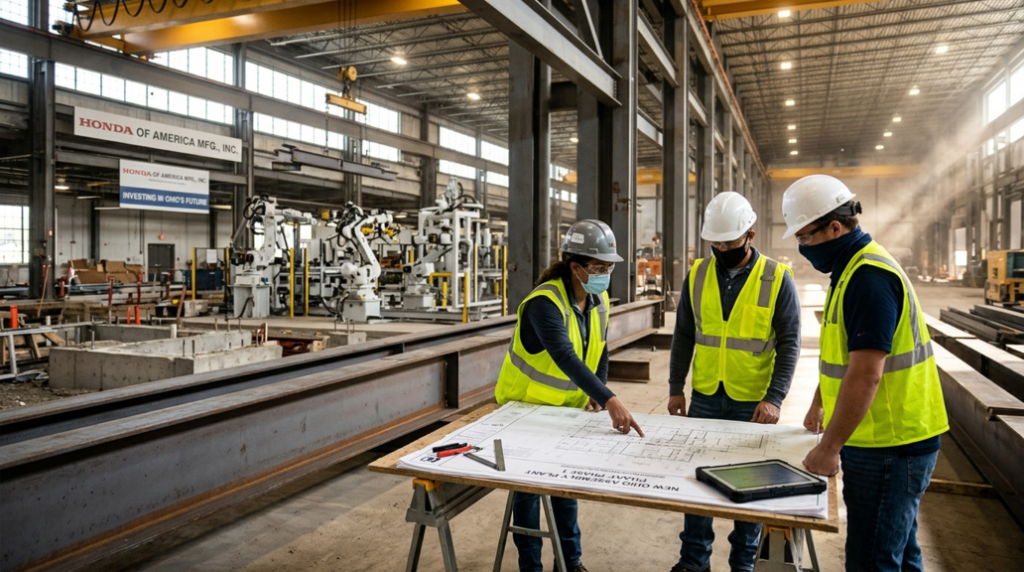
Honda Motor Co. has announced a major $3 billion investment to build a new vehicle assembly plant in central Ohio. The project, unveiled on November 9, 2026, will be located between Honda’s existing Marysville and East Liberty facilities. This new manufacturing site is expected to create more than 2,000 new jobs for American workers and significantly expand Honda’s U.S. production capacity.
The plant is designed to produce up to 240,000 vehicles annually once it begins production, which is scheduled for 2029 pending government approvals. While the facility will primarily focus on supporting Honda’s growing hybrid vehicle production, it will also have the flexibility to manufacture gasoline-powered and electric vehicles. This investment will raise Honda’s total U.S. vehicle production capacity to around 1.3 million vehicles per year.
Ohio officials highlighted the broader impact of Honda’s commitment to the state, which totals approximately $3.38 billion in investment and the creation of nearly 2,400 jobs. The facility will mark Honda’s fourth automobile manufacturing plant in Ohio, reinforcing the region’s importance in the company’s North American manufacturing strategy.
The decision to expand in Ohio reflects several factors, including the state’s established automotive manufacturing infrastructure, skilled labor force, and ongoing support from state and local economic development initiatives like JobsOhio and One Columbus. Governor Mike DeWine joined Honda leadership in announcing the project, underscoring its significance for the state’s industrial and workforce development.
This new plant will be critical for Honda as it meets increasing demand for hybrid vehicles in the U.S. market. The company continues to transition its portfolio toward electrification while maintaining production of combustion engine models, positioning itself to respond to evolving consumer preferences and regulatory requirements.
The facility’s opening represents a substantial industrial investment with implications for local communities, supply chains, and the broader U.S. manufacturing sector. It points to ongoing efforts by automakers to build domestic production capacity that can better support American workers and reduce reliance on international supply chains.
Overall, Honda’s $3 billion Ohio investment adds another chapter to the state’s strong automotive manufacturing tradition and highlights the continued importance of the Midwest in the future of American auto production.