U.S. manufacturers and foreign investors announced about 247,000 manufacturing jobs through reshoring and foreign direct investment (FDI) in 2025, according to the Reshoring Initiative’s 2025 Annual Report released this year. This figure marks nearly level job announcements with 2024 and represents the fifth consecutive year with more than 240,000 manufacturing jobs tied to reshoring and FDI.
Of the total jobs announced, reshoring accounted for approximately 153,000 positions, or 62 percent, while foreign direct investment made up around 94,000 jobs, or 38 percent. Since 2010, these combined activities have been linked to more than 2.3 million announced manufacturing jobs in the United States, including about 1.3 million over the past five years.
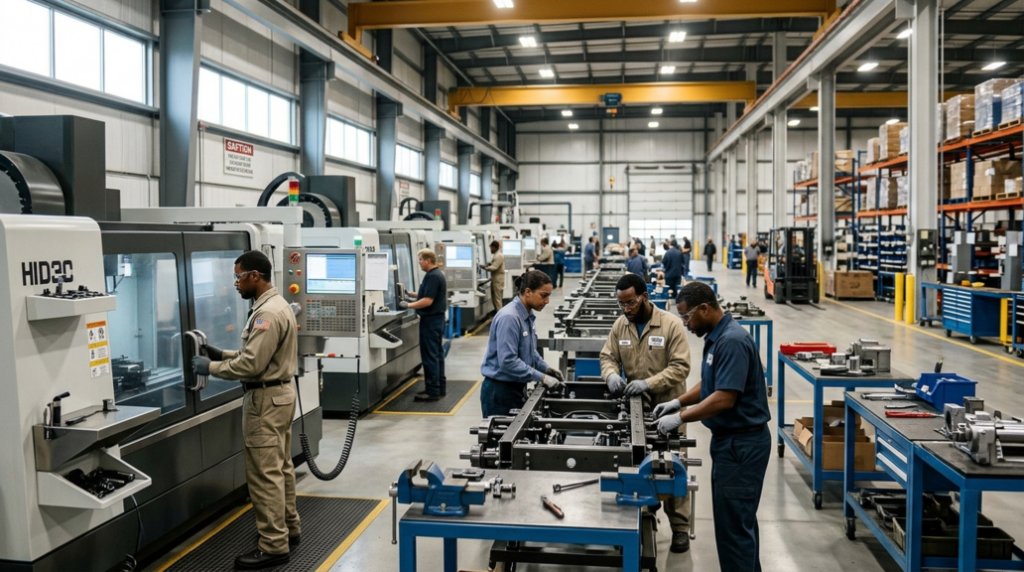
Transportation equipment industries led reshoring job announcements in 2025, while pharmaceutical and other high-technology sectors also saw significant investment. In fact, roughly 90 percent of the announced jobs were connected to manufacturing high- or medium-high-technology products. This trend highlights the growing role of automation, robotics, and artificial intelligence within reshoring and FDI projects.
Industry leaders point to supply chain resilience, geopolitical risk, proximity to customers, availability of skilled labor, and freight or tariff savings as key factors driving these investment decisions. Tariffs have played a role in encouraging some domestically focused investments but also contributed to delayed project implementations as companies awaited clearer policy direction.
Although the number of announced jobs signals production expansion and increased economic activity, automation and technological efficiencies may moderate the net number of workers ultimately required. Nonetheless, reshoring and foreign direct investment continue to underscore manufacturers’ strategies to strengthen U.S. industrial capacity, reduce supply chain vulnerabilities, and support a competitive workforce.
The sustained level of reshoring and FDI-related job growth in 2025 reflects ongoing interest by U.S. and foreign companies to anchor more manufacturing production domestically. As industries evolve amidst global uncertainties, these trends may help bolster American manufacturing’s long-term competitiveness and resilience.