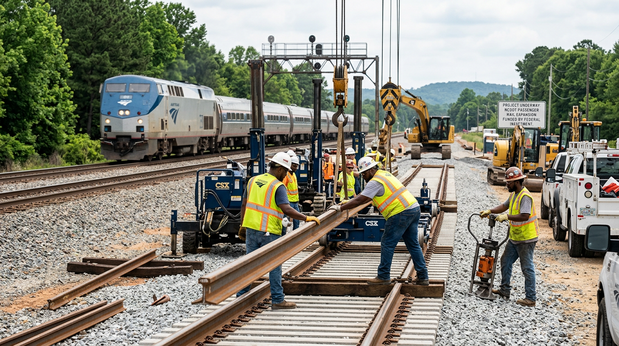
The U.S. Department of Transportation has announced a significant investment of $550 million aimed at expanding passenger rail service in North Carolina and Virginia. This funding is intended to alleviate train congestion and increase the frequency of passenger trains, reflecting a commitment to enhancing transportation efficiency in the region. As rail travel becomes more integral to American infrastructure, this project could play a vital role in supporting local communities and workers by improving connectivity and reducing travel times.
The investment will primarily focus on the S-Line project, which encompasses approximately 162 miles of railroad corridor. By restoring and upgrading this line, the initiative aims to facilitate smoother and more reliable train operations. Enhanced rail service not only benefits passengers but also stands to bolster local economies by making it easier for residents and businesses to connect with larger markets.
In recent years, there has been a growing recognition of the importance of rail infrastructure in the United States. With increasing congestion on roadways and a rising emphasis on sustainable transportation options, projects like this one signal a shift towards prioritizing rail as a viable alternative. The expansion is expected to support the overall resilience of the transportation network, as it diversifies travel options and reduces reliance on automobiles.
Moreover, the investment aligns with broader national trends in transportation policy, where federal funding is being directed toward modernizing infrastructure. The commitment to rail expansion is indicative of a strategic approach to addressing both current and future transportation needs. As more people seek efficient travel solutions, enhancing rail capacity can help meet this growing demand while also contributing to environmental sustainability.
Local communities stand to gain from this investment not only through improved transportation options but also through job creation associated with the construction and operation of the expanded rail services. Skilled workers will be needed for the upgrades and ongoing maintenance of the rail lines, potentially providing a boost to local employment in construction and rail operations. This aspect of the project highlights the interconnectedness of infrastructure investment and workforce development.
While challenges such as project timelines and budget management remain, the funding marks a proactive step towards modernizing North Carolina’s rail infrastructure. By investing in passenger rail, the federal government is supporting a vision of a more interconnected and efficient transportation system that could encourage economic growth and mobility in the region.
As this project progresses, it will be essential to monitor its impact on local communities and the broader transportation landscape. The expansion of passenger rail service not only promises immediate benefits in terms of travel efficiency but also lays the groundwork for future enhancements in American infrastructure. This development underscores the importance of sustained investment in transportation as a means of fostering economic resilience and improving quality of life for residents.
Overall, the $550 million investment in North Carolina’s passenger rail expansion serves as a reminder of the ongoing efforts to modernize the nation’s infrastructure. By addressing congestion and increasing service frequency, this initiative reflects a commitment to enhancing the reliability and efficiency of rail travel, ultimately benefiting both the economy and the communities it serves.