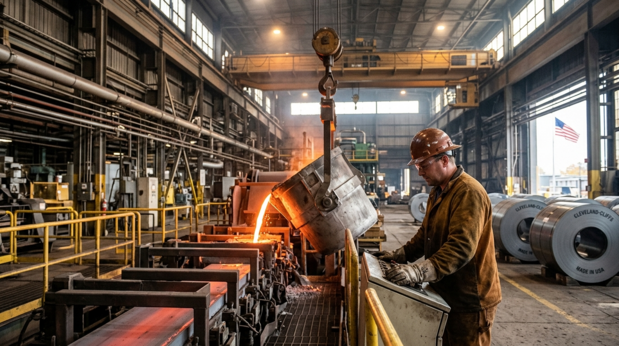
Cleveland-Cliffs, a prominent steelmaker based in Cleveland, reported a profit of $152 million for the third quarter of 2026, marking its first profitable quarter since 2024. This positive financial outcome is attributed to a combination of higher steel prices, increased sales volumes, and favorable trade policies that have supported U.S. mills. This development is significant for American industry, underscoring the resilience and potential growth within the domestic steel sector.
The uptick in profits reflects a broader trend in the steel industry, where demand has been bolstered by both infrastructure projects and a rebound in manufacturing activities. Higher steel prices have played a crucial role in enhancing the financial performance of steelmakers like Cleveland-Cliffs. As the economy continues to recover and expand, the steel industry is positioned to benefit from increased construction and manufacturing needs, which could further strengthen production capabilities across the nation.
In recent years, trade policies have become a pivotal factor for U.S. steelmakers. Supportive measures have helped shield domestic producers from international competition, enabling companies like Cleveland-Cliffs to operate more effectively in a challenging global market. The favorable environment has not only contributed to the company’s recent profitability but also signals a potential shift towards a more robust domestic manufacturing landscape.
Cleveland-Cliffs has also seen increased sales volumes, which can be attributed to a growing demand for high-quality steel products. This demand is not only vital for the company’s bottom line but also for the broader supply chain, as steel is a fundamental material used in various industries, including construction, automotive, and energy. The ability of Cleveland-Cliffs to capitalize on this demand indicates a positive momentum for American manufacturing and investment.
Additionally, the company’s recent success aligns with ongoing efforts to modernize and enhance production capabilities. Investments in technology and processes are crucial for maintaining competitiveness in the steel market. As Cleveland-Cliffs continues to innovate and adapt, it may lead to increased efficiency and lower production costs, further supporting its profitability and operational resilience.
While challenges remain, including fluctuations in global steel prices and potential shifts in trade policies, the current achievements of Cleveland-Cliffs highlight a constructive narrative for the American steel industry. The company’s profitability not only underscores its operational strength but also reflects a broader commitment to revitalizing American manufacturing. As stakeholders look to the future, Cleveland-Cliffs’ recent performance could serve as a model for other companies navigating similar market dynamics.
In conclusion, Cleveland-Cliffs’ return to profitability is a noteworthy development for the American steel industry. It points to a period of renewed growth and stability, driven by strong demand, supportive trade policies, and ongoing investments in modernization. As the company moves forward, its success could pave the way for enhanced production capacity and reliability within the domestic steel sector, ultimately benefiting local communities and the national economy.