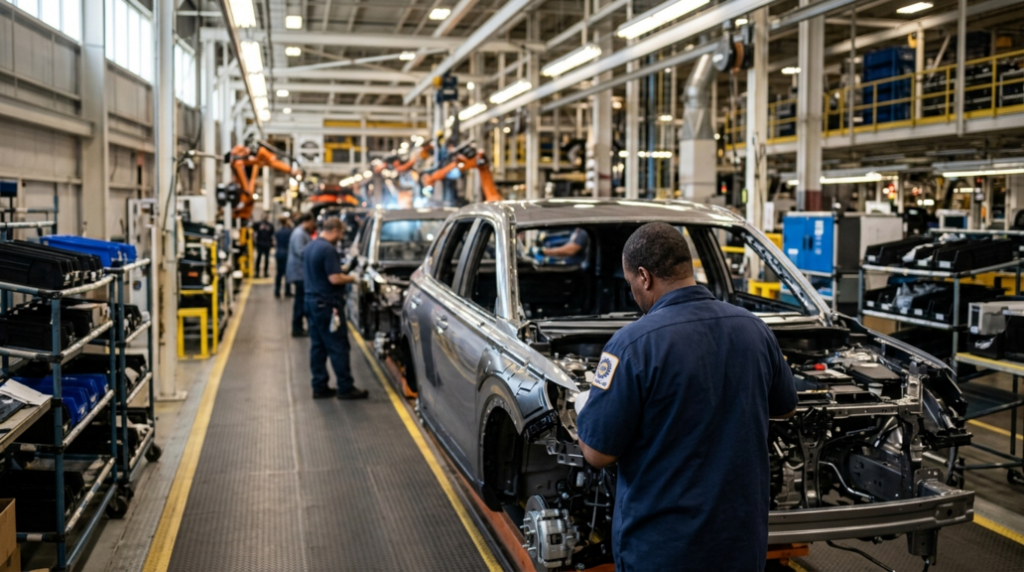
The United Auto Workers (UAW) are headed into a pivotal presidential election as incumbent Shawn Fain faces challengers supported by former union leaders, including Ray Curry, Rory Gamble, and Ron Gettelfinger. This contest is not just a routine leadership contest but reflects deeper tensions over the union’s strategy, governance, and approach toward the automotive industry’s ongoing transformation.
Shawn Fain, who rose to prominence leading the 2023 “Stand Up Strike” that energized UAW’s position against the Detroit Three, has become a deeply polarizing figure within the union. While many members praise his aggressive strike tactics and political activism, a group of former UAW presidents and other challengers have criticized his leadership. They advocate for greater transparency, a more cautious negotiation style, and structural reforms within the union’s governance.
In recent months, Fain also contended with a U.S. Department of Justice investigation, which opponents have seized on as a reason to pursue new leadership. Meanwhile, Fain and his supporters argue that his approach has strengthened the union’s bargaining power in a critical period for American manufacturing.
The implications of this election reach beyond the union membership. The UAW’s leadership directly influences negotiations with the Detroit automakers ‘ General Motors, Ford, and Stellantis ‘ at a time when these companies are managing industry-wide shifts such as the transition to electric vehicles (EVs), automation, and supply chain volatility. A change in UAW leadership could alter strike strategies, wage demands, and benefit priorities, potentially affecting production costs and timelines in one of the country’s largest industrial sectors.
Furthermore, Shawn Fain has closely linked the union’s stance with broader political currents, particularly the 2024 U.S. presidential election and national labor policies. How the union aligns politically under its next leader could shape federal decisions on industrial policy, EV incentives, and labor standards, which are critical to the future competitiveness of the American auto industry.
Internal discord also poses risks to union cohesion. Public challenges from former leaders and multiple candidates running to replace Fain highlight fractures that may complicate contract enforcement and organizing efforts ‘ factors that automakers watch closely due to their direct impact on operational stability.
As ballots are distributed and members prepare to vote, the 2026 UAW presidential election stands as a defining moment. It encapsulates a broader struggle over how the union will shape worker rights, labor costs, and industrial policy during a time of significant transformation and uncertainty for American manufacturing.