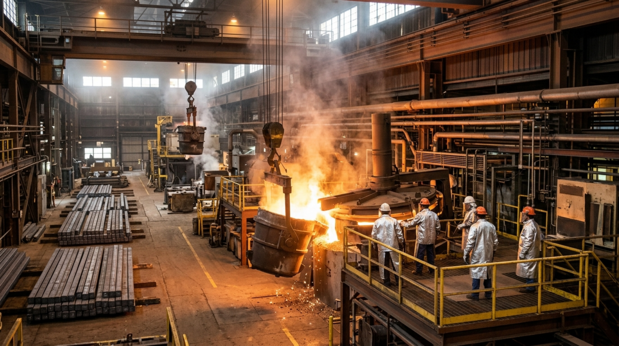
Domestic steel production in the United States has recently dropped to its lowest level in over four months, according to the American Iron and Steel Institute (AISI). This decline, while notable, occurs against a backdrop of historically strong production levels that have persisted for over five months, including a six-year high reached earlier this year. This data sheds light on the current state of the American steel industry, highlighting its resilience and ongoing importance to the nation’s industrial landscape.
The recent dip in steel production could be attributed to several factors, including seasonal variations and adjustments in demand across various sectors. However, the overall trend indicates a robust recovery and capacity within the domestic steel market, which remains a critical component of numerous industries, including construction, automotive, and manufacturing. The fact that production has maintained strength even amid this decline underscores the industry’s adaptability and the strategic importance of domestic steel production.
Historically, the American steel industry has faced numerous challenges, including competition from foreign markets and fluctuations in global demand. Nevertheless, the recent performance suggests a solid foundation built on significant investments in technology and modernization. Companies have been increasingly focused on improving efficiency and sustainability, which not only supports production capacity but also enhances competitiveness on the global stage.
Moreover, the strength of domestic steel production has broader implications for local economies and job markets. Steel manufacturing often supports thousands of jobs directly and indirectly, contributing to local economies through wages and related services. As production levels remain strong, this can help stabilize employment in regions heavily reliant on steel manufacturing, fostering community resilience and economic growth.
In addition to employment benefits, the current state of the steel industry reflects a growing recognition of the need for reliable domestic supply chains. As global supply chain disruptions have become more frequent, the importance of local production capabilities has been underscored. A strong domestic steel industry can enhance the reliability of supply chains for critical infrastructure projects and manufacturing processes, which is vital for maintaining operational continuity in various sectors.
While the drop in production may raise questions about future trends, it is essential to view this development within the larger context of ongoing industry strength. The fluctuations in production levels can often signal adjustments rather than declines, and the historical data indicates that the American steel industry is well-positioned to respond to changing market conditions. This adaptability is crucial for maintaining the momentum built over recent months.
In conclusion, while the recent decline in steel production may seem concerning at first glance, it is important to recognize the overall strength of the industry and its significant contributions to the American economy. The resilience demonstrated by the steel sector not only supports local communities and jobs but also reinforces the nation’s industrial capabilities in an increasingly competitive global market. As the industry continues to evolve, it remains a vital component of the broader economic landscape, poised to meet future challenges and opportunities.