
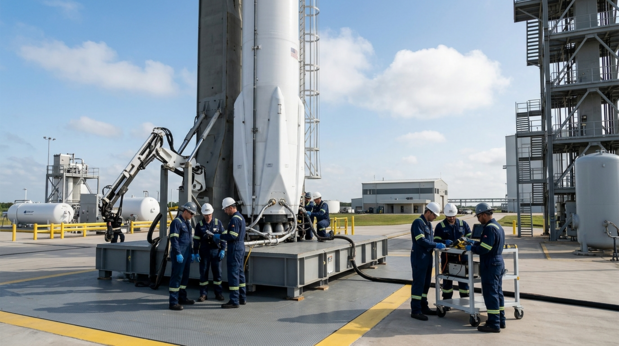
The Federal Aviation Administration (FAA) has proposed waiving certain environmental regulations to expedite the approval process for commercial space launches and reentries. This potential change, which involves relaxing requirements under 13 federal environmental and natural-resource laws, aims to streamline the licensing process for commercial space activities. By making it easier for companies to gain the necessary permits, the FAA’s proposal could enhance the competitiveness of the American aerospace sector, a field increasingly driven by private investment and innovation.
The move comes as the commercial space industry continues to grow, with a surge in interest from private companies looking to engage in space exploration and satellite deployment. Simplifying the regulatory landscape could attract more investment and support the development of new technologies in the aerospace realm. By reducing bureaucratic hurdles, the FAA is signaling a commitment to fostering an environment where American companies can thrive, thereby contributing to the nation’s industrial capacity.
Currently, the licensing process for commercial space activities can be lengthy and complex, often leading to delays in launching new ventures. The proposed waivers could significantly shorten this timeline, allowing companies to bring their projects to fruition more quickly. This acceleration could not only enhance the operational efficiency of current aerospace firms but also encourage new entrants into the market, further diversifying and expanding the industry.
In addition to supporting business growth, the proposal reflects a broader trend toward modernization in how the U.S. approaches regulatory frameworks for emerging technologies. As the aerospace sector evolves, aligning regulations with the pace of innovation is essential. This approach could help ensure that American companies remain at the forefront of space exploration and technology, reinforcing the country’s position as a leader in the global aerospace industry.
However, the proposal has also raised concerns regarding environmental impacts. Critics argue that waiving these regulations could lead to insufficient assessments of potential ecological consequences. The FAA will need to carefully balance the need for expediency with environmental stewardship to ensure that the growth of the commercial space sector does not come at the expense of natural resources and ecosystems.
The FAA’s initiative highlights the agency’s recognition of the importance of the commercial space sector to the U.S. economy. With increasing competition from international players, enhancing the efficiency of the licensing process could prove vital for maintaining American leadership in aerospace. By facilitating quicker launches and operations, the FAA is not only supporting current industry players but also laying the groundwork for future innovations.
As the proposal moves forward, it will undergo a public review process, allowing stakeholders to voice their opinions and concerns. This engagement is an important aspect of regulatory reform, ensuring that diverse perspectives are considered as the FAA seeks to modernize its approach. The outcomes of this process will be closely watched by industry leaders and environmental advocates alike, as they navigate the intersection of economic growth and ecological responsibility.
In conclusion, the FAA’s proposal to waive specific environmental regulations represents a significant step toward streamlining commercial space activities. While it carries potential risks, it also opens up opportunities for growth and innovation in the aerospace sector. The outcome of this initiative could shape the future landscape of American space exploration, reinforcing the value of adaptability and progress in a rapidly evolving industry.