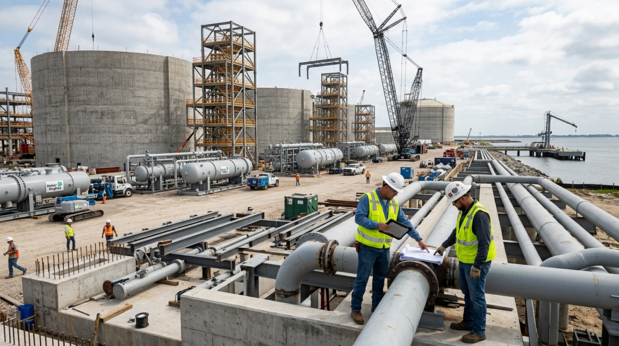
Baker Hughes has secured a significant order for liquefaction technology from Venture Global for its CP2 LNG expansion project in Louisiana. This development is notable as it will enhance the U.S. liquefied natural gas (LNG) export capacity, a critical component in the country’s energy strategy. The order includes the supply of six liquefaction blocks, contributing to a total of 12 liquefaction modules that will be installed at the facility.
The CP2 project is part of Venture Global’s broader efforts to increase LNG production, reflecting a growing demand for U.S. natural gas both domestically and internationally. With the global energy market evolving, this expansion aligns with the trend of increasing reliance on LNG as a cleaner alternative to other fossil fuels. Baker Hughes’ role in supplying advanced technology underscores the company’s position as a key player in the energy sector, particularly in innovative solutions that support energy production.
This order not only marks a significant milestone for Baker Hughes but also represents a broader investment in the U.S. energy infrastructure. The expansion will bolster the country’s export capabilities, which have seen substantial growth in recent years. In 2022, U.S. LNG exports reached record levels, and projects like CP2 are essential for maintaining this momentum. By enhancing export capacity, the project could help stabilize local economies and create job opportunities in the region.
Moreover, the CP2 expansion is expected to contribute to the resilience of the American energy supply chain. As global energy demands fluctuate, having a robust LNG export infrastructure allows the U.S. to respond effectively to both domestic needs and international markets. This adaptability is increasingly important as countries seek to diversify their energy sources amid geopolitical uncertainties.
While challenges remain, including regulatory hurdles and market fluctuations, the commitment by Baker Hughes and Venture Global to advance this project illustrates a proactive approach to energy production. The collaboration highlights the importance of technological innovation in overcoming these challenges, suggesting that continued investment in LNG technology could lead to more efficient and reliable energy solutions.
The CP2 expansion is also part of a larger trend in the energy sector towards modernization and sustainability. As the industry shifts focus towards cleaner energy sources, projects like this one demonstrate how traditional energy companies are evolving to meet new demands. This evolution is crucial for supporting the transition to a more sustainable energy future while maintaining economic growth.
In conclusion, Baker Hughes’ recent order for the CP2 LNG expansion signifies a constructive step forward for both the company and the U.S. energy sector. By enhancing LNG export capabilities, this project could support economic stability, job creation, and a more resilient energy infrastructure. As the demand for natural gas continues to rise, investments like these are pivotal for positioning the U.S. as a leader in the global energy market.