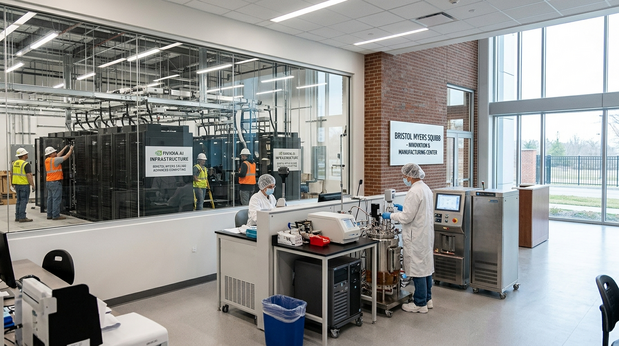
Bristol Myers Squibb has announced a partnership with Nvidia to construct a new artificial intelligence data center, marking a significant step in the pharmaceutical industry’s ongoing embrace of advanced technology. This collaboration aims to enhance drug discovery and development processes, potentially leading to more efficient production and improved patient outcomes. As the pharmaceutical sector increasingly integrates AI, this development underscores the industry’s commitment to innovation and modernization.
This new AI factory will be among the largest in the life sciences field, joining similar initiatives by other pharmaceutical companies that have recognized the transformative potential of AI. By leveraging Nvidia’s cutting-edge technology, Bristol Myers seeks to streamline its research capabilities, which could lead to faster drug development timelines and a more robust pipeline of therapies. Such advancements not only bolster Bristol Myers’ competitive edge but also reflect a broader trend within the industry toward technological investment.
The collaboration with Nvidia is indicative of a growing recognition among pharmaceutical firms that AI can play a crucial role in addressing complex challenges in drug development. With the ability to analyze vast datasets, AI can identify patterns and insights that human researchers might overlook. This capability could lead to breakthroughs in understanding diseases and developing new treatment options, thereby enhancing the overall efficiency of American pharmaceutical production.
In parallel with Bristol Myers’ initiative, Samsung Biologics has made headlines by bidding $1.8 billion for PolyPeptide Group, a company specializing in peptide manufacturing. This move highlights the competitive landscape of the pharmaceutical sector, where companies are actively seeking to expand their capabilities and market positions. By acquiring PolyPeptide, Samsung aims to strengthen its portfolio in biologics, an area of growing demand within the industry.
Both developments reflect a dynamic and evolving pharmaceutical landscape that is increasingly focused on innovation and strategic partnerships. As companies like Bristol Myers and Samsung Biologics invest in technology and acquisitions, they are not only enhancing their operational capacities but also contributing to the resilience and reliability of the American supply chain. Such investments can lead to job creation and support local economies, providing a ripple effect that benefits communities across the country.
While challenges remain, including the complexities of integrating new technologies and navigating regulatory environments, these initiatives demonstrate a proactive approach to overcoming obstacles. The focus on AI and strategic acquisitions signals a commitment to staying competitive in a rapidly changing market. As the pharmaceutical industry continues to evolve, these developments could pave the way for more innovative solutions and improved healthcare outcomes.
In conclusion, Bristol Myers’ partnership with Nvidia and Samsung Biologics’ acquisition efforts illustrate a significant moment in the pharmaceutical industry. By embracing advanced technologies and pursuing strategic growth, these companies are enhancing their production capabilities and reinforcing the importance of innovation in American industry. The ongoing investment in AI and biologics not only strengthens their market positions but also contributes to a more resilient and capable healthcare system for the future.