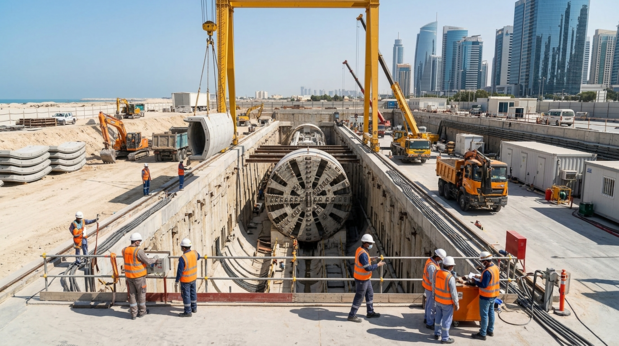
Dubai has recently awarded significant contracts for its $22 billion Strategic Sewerage Tunnels (DSST) project, a major public-private initiative aimed at upgrading the emirate’s wastewater infrastructure. This initiative not only highlights the ambitious infrastructure goals of Dubai but also reflects the global trend toward modernizing essential systems that support urban communities. As cities worldwide grapple with aging infrastructure, such projects underscore the importance of investment in public utilities.
The DSST project is designed to enhance the management of wastewater in Dubai, a rapidly growing city with increasing demands on its infrastructure. By selecting two consortia for key packages, the Dubai Municipality is taking substantial steps to ensure that the emirate can handle its wastewater needs effectively. This development is indicative of a broader movement where urban centers are prioritizing sustainability and resilience in their infrastructure planning.
Modernizing wastewater systems is crucial not only for environmental sustainability but also for public health. Effective sewage management helps prevent contamination and maintains clean waterways, which is a growing concern in many urban areas. The DSST project is expected to bolster Dubai’s capacity to manage wastewater efficiently, a necessity for its population, which continues to expand due to economic opportunities and tourism.
While the project is located in the Middle East, its implications resonate globally. The emphasis on infrastructure development in Dubai can serve as a model for cities in the United States and beyond that are facing similar challenges. The construction and engineering sectors in various regions can draw lessons from such large-scale projects, particularly in terms of execution and public-private partnerships.
Moreover, the contracts awarded for the DSST project may lead to increased collaboration among international construction firms, which could have a ripple effect on supply chains and skilled labor markets. As these firms engage in such large projects, they may seek out local suppliers and skilled workers, thus benefiting local economies and communities.
Challenges do exist, including the potential for project delays and budget overruns, common in large infrastructure initiatives. However, the commitment to enhancing wastewater infrastructure in Dubai demonstrates a proactive approach to urban planning. This focus on modernizing essential services not only meets immediate needs but also prepares for future growth and environmental challenges.
In conclusion, the Dubai Strategic Sewerage Tunnels project represents a significant step forward in urban infrastructure development. While it may not directly impact American industry, it serves as a reminder of the importance of investing in public utilities and the benefits that arise from such initiatives. As cities across the globe, including those in the U.S., continue to face infrastructure challenges, the lessons learned from Dubai’s ambitious projects could inform future investments and strategies aimed at sustainable urban development.