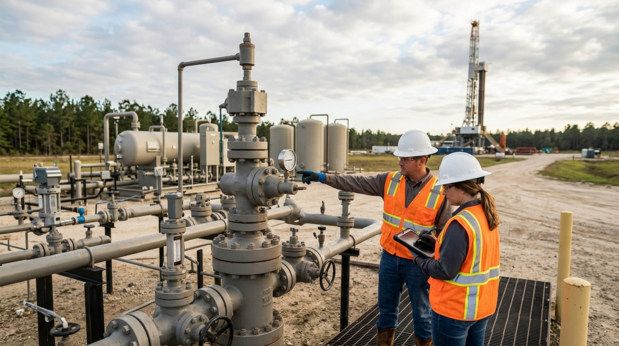
Western Haynesville wells are currently demonstrating strong natural gas production, a development that underscores the potential for growth within the American energy sector. Operators in this region are now tasked with addressing drilling costs while showcasing the replicability of these successful outcomes. This situation reflects a broader trend in the oil and gas industry, where efficiency and cost management are becoming increasingly critical in sustaining production levels.
The Haynesville Shale, located primarily in Louisiana and Texas, has long been recognized for its significant natural gas reserves. Recent data indicates that wells in this area are yielding impressive production rates, which could enhance the overall output of domestic natural gas. This uptick in production is particularly relevant as the nation continues to navigate fluctuating energy demands and market conditions, highlighting the importance of reliable energy sources.
However, the success of these wells comes with challenges. Operators must find ways to reduce drilling costs without compromising the quality of their output. This need for cost efficiency is a common theme across the energy sector, as companies face pressures from both market prices and operational expenses. By focusing on cost reduction strategies, operators can improve their profit margins and ensure the long-term viability of their operations.
In addition to cost management, the ability to replicate successful drilling results is crucial. Demonstrating that these production levels can be consistently achieved across multiple wells will be essential for attracting investment and ensuring sustained interest in the Haynesville region. Investors and stakeholders are keenly watching how these operators will adapt and innovate, as successful replication could lead to increased investment in infrastructure and technology.
The implications of strong gas production in the Haynesville extend beyond just the operators themselves. A robust natural gas supply can contribute to energy security for the United States, helping to stabilize prices and provide a reliable source of energy for consumers and businesses alike. Additionally, the focus on optimizing production methods can lead to advancements in technology and practices that may benefit the entire industry.
Community impact is another important aspect to consider. As production increases, so does the potential for job creation in local areas, ranging from skilled labor in drilling and production to support roles in logistics and supply chain management. This could lead to a revitalization of local economies, providing new opportunities for workers and businesses in the region.
While the road ahead includes navigating challenges such as cost pressures and the need for operational efficiency, the current performance of Western Haynesville wells illustrates a productive phase for American natural gas production. The ability to enhance production capabilities while addressing costs reflects a commitment to modernizing operations and adapting to market demands.
In conclusion, the developments in the Western Haynesville region are noteworthy for their potential contributions to American energy production. As operators work to optimize their processes and demonstrate replicability, the ongoing advancements could provide significant benefits not just for the industry, but also for local communities and the broader economy. This scenario reinforces the importance of resilience and innovation in the face of evolving challenges within the energy sector.