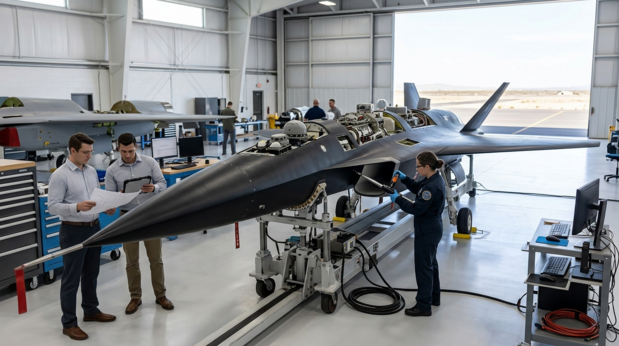
The Department of Defense’s Defense Innovation Unit has expanded its contract with Hermeus, a company focused on developing high-speed uncrewed aircraft. This enhancement aims to advance testing capabilities for supersonic flight, potentially transforming future military operations. As the Pentagon invests in cutting-edge aviation technology, this move underscores the United States’ commitment to maintaining its competitive edge in aerospace innovation.
Hermeus is known for its ambitious goal of developing supersonic aircraft that can operate without a crew. The company has made significant strides in recent years, including achieving its first unmanned supersonic flight. This progress not only highlights Hermeus’ technological advancements but also aligns with the Defense Department’s broader strategy to integrate innovative solutions into military operations.
The expanded contract will allow Hermeus to conduct additional tests and further refine its aircraft designs. These developments could lead to faster and more efficient military logistics, enhancing the rapid deployment capabilities of the U.S. Armed Forces. As the demand for advanced technology in defense grows, the collaboration with Hermeus reflects a strategic investment in the future of military aviation.
While the primary focus of this initiative is military applications, the implications for the aerospace industry are significant. Advancements in supersonic technology could eventually benefit commercial aviation, potentially leading to shorter flight times for passengers. Such innovations may also stimulate job creation in aerospace manufacturing and related sectors, contributing to local economies.
The Defense Innovation Unit’s support for Hermeus is part of a broader trend of increasing investments in defense technology. The U.S. government has been actively seeking to partner with private companies to accelerate the development of advanced systems. This approach not only fosters innovation but also encourages collaboration between public and private sectors, which can lead to a more robust industrial base.
As the aerospace sector evolves, the focus on uncrewed and supersonic aircraft represents a shift towards more advanced operational capabilities. The Hermeus program could pave the way for new standards in speed and efficiency within both the military and commercial aviation arenas. This development highlights the importance of investing in research and development to ensure the U.S. maintains its leadership position in global aerospace technology.
In conclusion, the Pentagon’s expanded contract with Hermeus marks a significant step in advancing high-speed uncrewed aircraft technology. While the immediate focus is on military applications, the potential benefits for the broader aerospace industry and American workers could be substantial. As this program develops, it will be essential to monitor its impact on innovation, job creation, and the future of aviation in the United States.