
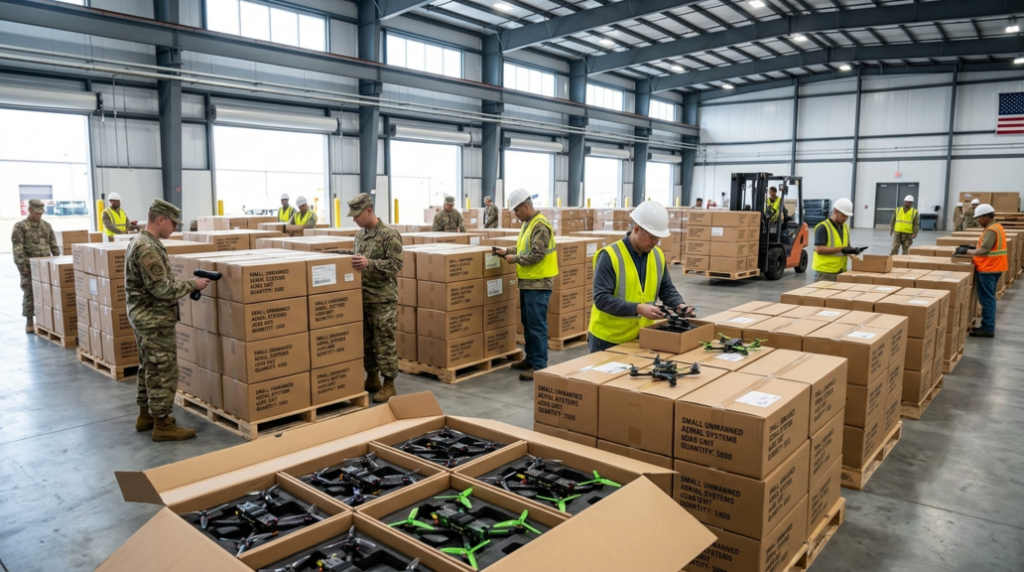
The Pentagon has begun receiving 20,000 small, first-person view (FPV) drones as part of its ‘Drone Dominance’ initiative. This program aims to enhance the U.S. military’s capabilities in unmanned aerial systems (UAS), with orders placed through ten different vendors. The initiative is part of a broader strategy to modernize the military’s approach to aerial surveillance and combat, reflecting an ongoing commitment to technological advancement in defense.
The Drone Dominance initiative is positioned to significantly impact American industry and defense capabilities. The Pentagon’s orders are part of a larger plan that anticipates acquiring up to 150,000 drones in subsequent phases. This scale of procurement could lead to increased production demands on U.S. manufacturers, potentially benefiting local economies and creating job opportunities in the drone sector.
Funding for the initiative comes from a $1 billion allocation aimed at rapidly producing low-cost, expendable drones. These FPV drones are designed to be versatile and effective in various military operations, underscoring the military’s focus on integrating advanced technology into its operations. As production ramps up, manufacturers will need skilled workers to meet the demands of this growing sector, which could enhance workforce development in areas related to aerospace and defense.
The introduction of these drones is part of a broader push by the Department of Defense to ensure that every warfighter has access to advanced aerial capabilities. The Pentagon’s emphasis on drone technology reflects a recognition of its increasing importance in modern warfare, where unmanned systems can provide critical support in surveillance and combat scenarios.
As the program unfolds, the implications for supply chains are noteworthy. The reliance on multiple vendors for drone production could help diversify the supply chain, potentially reducing risks associated with dependence on a single source. This diversity might lead to more resilient production networks, which is particularly important in the context of global supply chain disruptions that have affected various industries in recent years.
Furthermore, the focus on small, FPV-style drones aligns with trends in the defense sector toward more agile and cost-effective solutions. These drones are designed to be easily deployable and effective in dynamic environments, which could enhance the operational capabilities of U.S. forces. This adaptability may also spur further innovation within the industry, encouraging companies to develop new technologies and applications for drone use.
Overall, the Pentagon’s receipt of these drones marks another step in enhancing the U.S. military’s technological edge. As the initiative progresses, it will be important to monitor how these developments influence American workers, production capacities, and the overall landscape of the defense industry. The initiative not only aims to bolster military readiness but may also have lasting effects on domestic manufacturing and skilled labor in the U.S.
In conclusion, the Drone Dominance initiative represents a significant investment in the future of military technology. By integrating advanced drone capabilities, the Pentagon is not only addressing immediate defense needs but also fostering growth in the domestic drone industry, which could have positive implications for American workers and the economy as a whole.