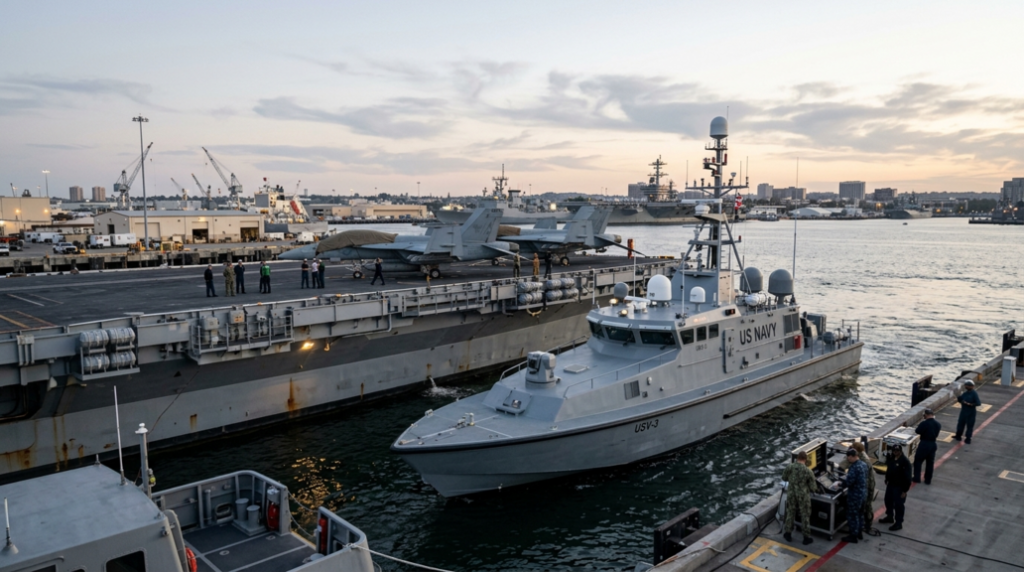
The U.S. Navy’s aircraft carrier Theodore Roosevelt is set to deploy with an innovative addition: a robot ship. This significant development marks a potential shift in how naval operations may be conducted in the future. Experts suggest that integrating autonomous vessels into carrier strike groups could enhance operational efficiency and expand the capabilities of the Navy.
The inclusion of a robot ship during this deployment underscores the Navy’s ongoing efforts to incorporate advanced technology into its operations. The autonomous vessel, often referred to as an Unmanned Surface Vehicle (USV), is designed to perform a variety of tasks, including reconnaissance and logistical support. This could allow manned ships to focus on more complex missions, thereby optimizing resource allocation within naval fleets.
The deployment of the Theodore Roosevelt with a robot ship also reflects a broader trend within military operations toward automation and robotics. As global maritime challenges evolve, the U.S. Navy is exploring ways to leverage technology to maintain its strategic edge. The introduction of autonomous ships could play a role in enhancing situational awareness and decision-making processes during missions.
This shift is not just about technology; it represents a potential transformation in naval warfare. Experts believe that the ability to deploy robotic ships alongside traditional vessels could change the dynamics of naval engagements. The Navy’s exploration of these technologies may lead to new tactics and strategies that could be crucial in future conflicts, particularly as other nations also invest in similar advancements.
The implications of this development extend beyond military strategy. For American workers and defense contractors, the integration of robotic systems into naval operations could create new opportunities in the fields of engineering, manufacturing, and technology development. As the Navy invests in these capabilities, it may stimulate demand for skilled labor in sectors related to robotics and autonomous systems.
Furthermore, the deployment of the Theodore Roosevelt with a robot ship could enhance the Navy’s operational reach and effectiveness. By utilizing unmanned vessels for tasks that are traditionally labor-intensive or risky for personnel, the Navy could improve its responsiveness to emerging threats while ensuring the safety of its crew.
As the Theodore Roosevelt embarks on this historic mission, it serves as a reminder of the ongoing evolution within military operations. The combination of traditional naval power with cutting-edge technology like autonomous ships could redefine the future of maritime security. This development not only reflects the Navy’s commitment to innovation but also points to a potential shift in how American defense capabilities are structured in the years to come.
In conclusion, the deployment of the Theodore Roosevelt with a robot ship is a noteworthy step in the Navy’s journey toward modernization. While it remains to be seen how this will impact future operations, the integration of autonomous vessels could enhance the Navy’s effectiveness and open new avenues for American workers in the defense sector.