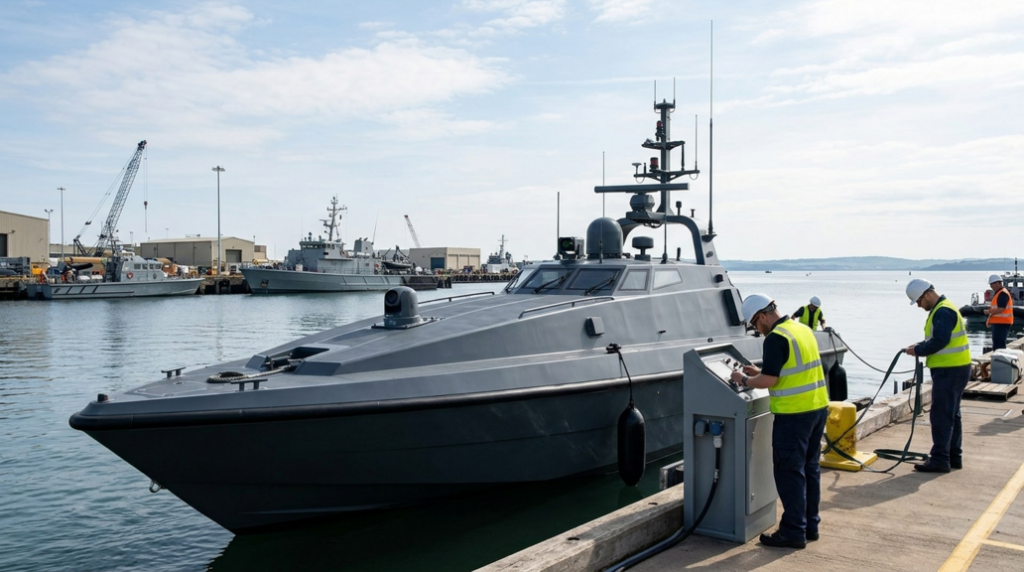
The U.S. Navy has selected seven companies to advance to the at-sea testing phase of its Medium Unmanned Surface Vessel (MUSV) program. This decision marks a significant step in the development of advanced maritime technology and underscores the Navy’s commitment to integrating innovative solutions into its operations. Among the companies chosen are industry leaders such as Leidos, HII, and Saronic Technologies, each bringing unique expertise to the project.
The at-sea testing phase is set to take place from June to October and will evaluate the capabilities of the selected vessels against Navy requirements. This phase is crucial for determining how well these unmanned systems can perform in real-world conditions, which may influence their future deployment in various naval operations. The testing is expected to provide valuable insights into the operational effectiveness of these advanced technologies.
The MUSV program aims to enhance the Navy’s operational capabilities while also contributing to the broader defense industrial base. By engaging multiple companies, the Navy is fostering competition and collaboration, which could lead to more innovative solutions and improved technologies. This initiative reflects a growing trend within the defense sector to leverage private sector expertise and innovation in military applications.
The selected companies bring a diverse range of skills and technologies to the table. For instance, Leidos is known for its work in systems integration and advanced analytics, while HII specializes in shipbuilding and defense technologies. Saronic Technologies focuses on autonomous systems, which will be crucial for the MUSV’s operational success. This mix of expertise highlights the collaborative nature of modern defense projects and the potential for cross-industry partnerships.
The implications of the MUSV program extend beyond military applications. As these companies develop and refine their technologies, there is potential for spillover benefits to commercial maritime industries. Innovations in unmanned systems could lead to advancements in shipping, logistics, and even search and rescue operations, thereby enhancing the capabilities of various sectors.
Moreover, the focus on unmanned systems aligns with broader trends in defense spending and technology development. The U.S. government has been increasingly investing in advanced technologies to maintain a competitive edge in global defense. This investment not only supports national security but also promotes job growth in high-tech sectors, potentially benefiting skilled workers in engineering, manufacturing, and technology development.
As the at-sea testing phase progresses, it will be important to monitor the outcomes and lessons learned from these trials. The results could shape future naval strategies and influence the direction of defense investments. Additionally, successful deployment of these technologies may encourage further innovation in the defense industry, fostering a culture of continuous improvement and adaptation.
In conclusion, the Navy’s selection of seven companies for the MUSV at-sea testing phase is a notable development in defense technology. As these companies work to demonstrate their capabilities, the potential impacts on American industry and technological advancement are significant. This initiative not only supports military goals but also holds promise for broader applications in maritime logistics and industry innovation.