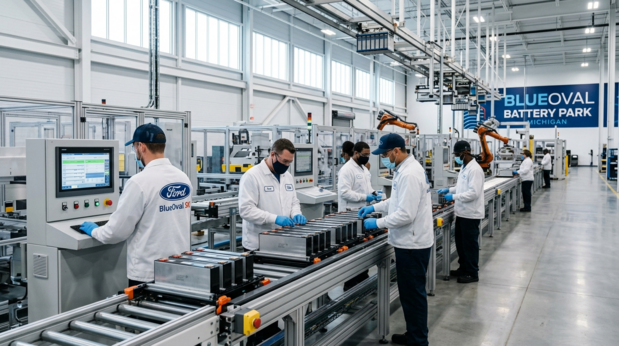
Ford Motor Company has announced an expansion of its battery plant in Michigan, which is expected to enhance the production of lithium-iron phosphate batteries for electric vehicles (EVs). This development marks a significant step in the automaker’s efforts to strengthen its position in the rapidly evolving EV market, while also contributing to local job creation and the broader U.S. manufacturing landscape.
The expansion is part of Ford’s commitment to sustainable automotive technology, reflecting a growing industry trend towards domestic battery production. By focusing on U.S.-made batteries, Ford aims to reduce reliance on foreign supply chains, thereby increasing the resilience and reliability of its operations. This move not only supports the company’s strategic goals but also aligns with national interests in enhancing domestic manufacturing capabilities.
As part of this initiative, Ford plans to significantly ramp up hiring at the Michigan plant, which is poised to create hundreds of jobs in the region. The emphasis on skilled labor underscores the importance of workforce development in the automotive sector, particularly as the demand for EVs continues to rise. With the auto industry undergoing a transformative shift, investing in skilled work is crucial for maintaining competitive advantage and ensuring a robust supply of talent for future innovations.
The production of lithium-iron phosphate batteries is particularly noteworthy as these batteries are recognized for their safety and longevity. By investing in this technology, Ford is not only responding to consumer demand for more sustainable vehicles but is also positioning itself as a leader in battery innovation. This investment signals a commitment to modernizing production processes and enhancing overall efficiency within the industry.
Furthermore, the expansion of the Michigan battery plant is indicative of a broader trend within American manufacturing, where companies are increasingly looking to insource production capabilities. This shift not only supports local economies but also contributes to national economic stability by reducing dependence on international suppliers. By bolstering domestic production, Ford and similar companies are helping to create a more resilient supply chain that can better withstand global disruptions.
While challenges remain, including potential supply chain bottlenecks and the need for ongoing investment, the progress at Ford’s Michigan facility illustrates a positive trajectory for American industry. The plant’s expansion reflects a proactive approach to meeting the growing demand for electric vehicles, while also fostering economic opportunities in local communities.
In conclusion, Ford’s expansion of its Michigan battery plant is a constructive development for the automotive industry and the broader manufacturing sector. By prioritizing domestic production and skilled labor, Ford is not only enhancing its operational capabilities but also contributing to a more sustainable and competitive future for American manufacturing. This initiative exemplifies how strategic investments in technology and workforce can yield practical benefits for both the company and the communities in which it operates.