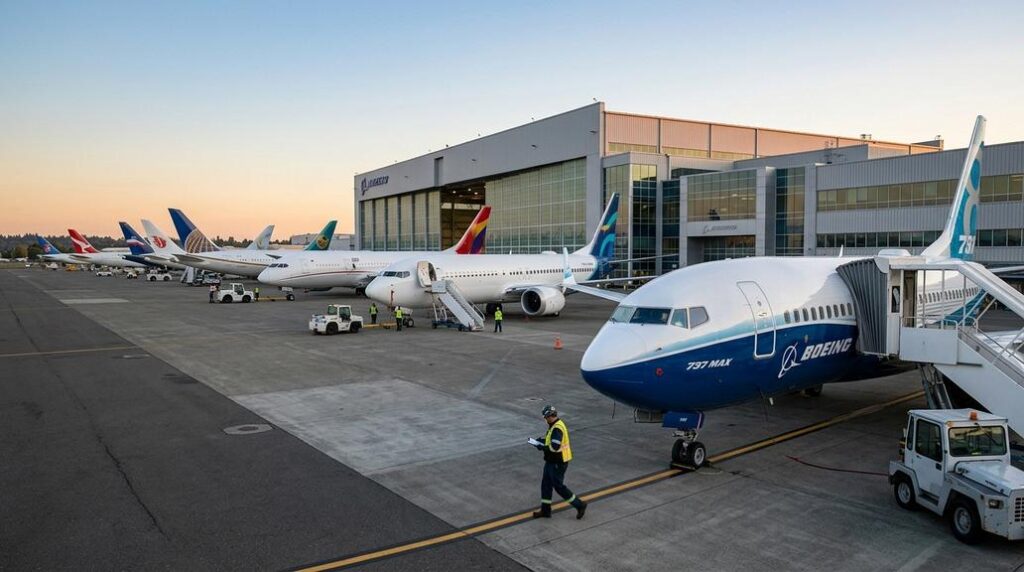
Boeing reported a notable increase in its commercial aircraft deliveries in May, with 60 planes delivered—a 33% rise compared to May of the previous year. This uptick in output marks an important phase in Boeing’s ongoing efforts to recover from production challenges that have affected deliveries in recent times.
For Boeing, the increase in deliveries is a positive sign of improving production efficiency. Deliveries are critical to the company’s revenue recognition and cash flow, which in turn support ongoing investments and operations. While this growth does not fully resolve underlying operational hurdles, it points to gradual progress.
The surge in deliveries also carries significant implications for Boeing’s extensive U.S. supply chain. American suppliers that provide parts, materials, and services to Boeing receive steady demand tied closely to the company’s production rates. The higher output in May supports supplier revenues, helping to sustain thousands of jobs in manufacturing plants across the country.
Communities hosting Boeing factories and supplier facilities benefit from the ripple effects of increased deliveries as well. Regional economies, especially in aerospace hubs like the Puget Sound area, depend on the aerospace sector for employment opportunities and local spending. This also includes traditional U.S. manufacturing regions, which host jet engine and other aeronautical component suppliers. A stronger delivery pace contributes to economic stability and job retention in these areas.
While the 33% increase is meaningful, industry observers note that Boeing still faces challenges maintaining steady delivery momentum amid regulatory scrutiny and production constraints. Nonetheless, the recent delivery figures mark another step forward for the company and its industrial ecosystem.
In sum, May’s delivery growth for Boeing provides a useful indicator of recovery within the American aerospace manufacturing base. The impact extends beyond the company itself to the broader network of suppliers and the communities that rely on aerospace production for economic livelihood.